
Introduction
Investing used to require either significant wealth to hire a financial advisor or the confidence to build and manage your own portfolio. For most people, that meant either paying high fees or avoiding investing altogether.
Robo-advisors changed that equation completely.
These automated investment platforms use algorithms to build, manage, and rebalance your portfolio based on your goals, timeline, and risk tolerance. Instead of paying a human advisor 1% or more of your assets annually, robo-advisors typically charge 0.25% to 0.50%—and some charge nothing at all beyond the underlying investment costs.
The result? Robo-advisors have democratized investing. You can start with as little as $1 in some cases, get professionally diversified portfolios, automatic rebalancing, tax-loss harvesting, and ongoing management—all without needing to understand the difference between stocks and bonds or choosing individual investments yourself.
But here is the challenge: not all robo-advisors are created equal. Some excel for beginners. Others offer advanced features for experienced investors. Some have low fees but high minimums. Others have no minimums but limited features. Some include human advisor access. Others are completely automated.
In this comprehensive guide, I will compare the top 10 robo-advisors of 2026 across every factor that matters—fees, minimums, features, investment approach, tax strategies, and user experience. Whether you are investing your first $100 or building a six-figure portfolio, you will know exactly which platform fits your needs by the end.
https://finance4you.online/side-hustle-ideas-2026/
Let’s find the best robo-advisors 2026.
What Is a Robo-Advisor?
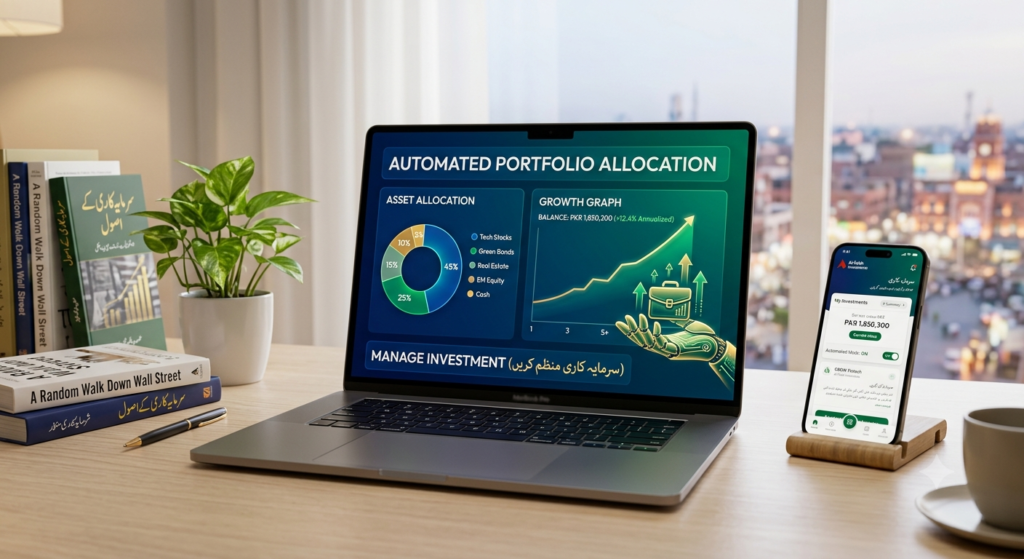
A robo-advisor is an automated investment platform that builds and manages a diversified portfolio for you using algorithms and modern portfolio theory. Instead of choosing individual stocks or funds yourself, you answer questions about your goals, timeline, and risk tolerance, and the robo-advisor creates a personalized portfolio.
How Robo-Advisors Work
The process is surprisingly simple:
- You answer questions about your age, income, goals, investment timeline, and comfort with risk
- The algorithm recommends a portfolio typically made up of low-cost ETFs or index funds
- You fund your account with an initial deposit and optional recurring contributions
- The platform manages everything including automatic rebalancing, dividend reinvestment, and sometimes tax-loss harvesting
- You monitor progress through a dashboard and make adjustments as your life changes
The entire process is digital, accessible through web browsers and mobile apps, with minimal ongoing effort required from you.
Why Robo-Advisors Became Popular
Robo-advisors grew rapidly because they solve real problems:
- Lower costs than traditional financial advisors
- Lower minimums than most human advisors require
- Automatic management removes emotional decision-making
- Tax optimization through strategies like tax-loss harvesting
- Accessibility for beginners who feel overwhelmed by investing
For many investors, especially those just starting or those with straightforward goals like retirement, robo-advisors offer an excellent middle ground between DIY investing and expensive human advisors.
If you are deciding whether robo-advisors fit your strategy, review our guide on to understand how automated platforms compare to self-directed investing.
What to Look for in a Robo-Advisor
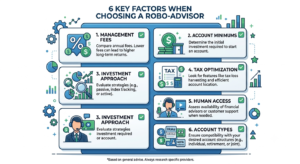
Not every robo-advisor will fit your situation. Here are the key factors to evaluate.
Management Fees
Robo-advisors typically charge an annual advisory fee ranging from 0% to 0.50% of your assets under management. This is in addition to the expense ratios of the underlying ETFs or mutual funds they use.
For example, if a robo-advisor charges 0.25% annually and your ETFs average 0.10% in expense ratios, your total cost is 0.35% per year.
Lower fees mean more of your money stays invested and compounds over time. Even small percentage differences add up significantly over decades.
Account Minimums
Some robo-advisors require no minimum deposit at all, making them accessible to anyone. Others require $500, $1,000, $10,000, or even $100,000 to open an account or access premium features.
If you are starting with $100, high minimums immediately disqualify certain platforms.
Investment Approach
Most robo-advisors use passive index investing with ETFs, but their specific strategies vary:
- Broad market indexing using total market funds
- Factor-based investing emphasizing value, size, or momentum factors
- Socially responsible investing (SRI) or ESG portfolios
- Tactical asset allocation with active adjustments
- Direct indexing for high-net-worth clients
Understanding the platform’s philosophy helps you choose one aligned with your values and beliefs.
Tax Optimization
Tax-loss harvesting is a strategy where the robo-advisor sells investments at a loss to offset taxable gains, potentially reducing your tax bill. Many premium robo-advisors offer this feature, though it is most valuable for taxable accounts with larger balances.
In retirement accounts like IRAs or 401(k)s, tax-loss harvesting provides no benefit because you are not paying taxes on gains annually.
Human Access
Some robo-advisors are fully automated with no human interaction. Others offer access to certified financial planners through phone, email, or video calls—sometimes included, sometimes for an additional fee.
If you value occasional human guidance, this feature may be worth prioritizing.
Account Types Offered
Check which account types the platform supports:
- Individual taxable brokerage accounts
- Traditional IRAs
- Roth IRAs
- SEP IRAs for self-employed individuals
- Joint accounts
- Trust accounts
- 401(k) rollovers
Not every platform offers every account type, so verify before committing.
The 10 Best Robo-Advisors of 2026
Now let’s compare the top platforms. I have organized them by what makes each one stand out.
1. Betterment — Best Overall for Most Investors
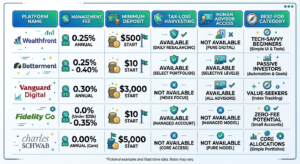
Management Fee: 0.25% annually (Digital plan)
Account Minimum: $0
Human Advisor Access: Available with Premium plan (0.65% fee, $100,000 minimum)
Betterment consistently ranks as one of the best all-around robo-advisors because it balances accessibility, features, and cost effectively. With no account minimum, automatic tax-loss harvesting on all accounts, and a clean user interface, it is ideal for beginners and experienced investors alike.
Key Features:
- Automatic rebalancing
- Tax-loss harvesting on all account sizes
- Goal-based investing tools
- Socially responsible portfolio options
- Cash reserve account option
- Fractional shares
- Retirement planning tools
Best For: Beginners and long-term investors who want a simple, low-cost, feature-rich platform.
Cons: The 0.25% fee is higher than some competitors, and advanced investors may want more customization.
https://finance4you.online/sustainable-investing-esg-funds-guide/
2. Wealth front — Best for Tax-Loss Harvesting
Management Fee: 0.25% annually
Account Minimum: $500
Human Advisor Access: None (fully automated)
Wealth front pioneered many robo-advisor features and remains a leader in tax optimization. Its daily tax-loss harvesting and direct indexing for larger accounts make it particularly attractive for taxable brokerage accounts.
Key Features:
- Daily tax-loss harvesting
- Direct indexing for accounts over $100,000
- Stock-level tax-loss harvesting for premium accounts
- 529 college savings plans
- Cash account with competitive rates
- Financial planning tools
- Cryptocurrency exposure through trusts
Best For: Tax-conscious investors with taxable accounts who want sophisticated tax optimization.
Cons: $500 minimum is higher than some competitors. No human advisor access.
3. SoFi Automated Investing — Best for No Fees
Management Fee: 0%
Account Minimum: $0
Human Advisor Access: Included at no additional cost
SoFi stands out by charging zero management fees while still offering professional portfolio management, automatic rebalancing, and access to certified financial planners. This makes it one of the most cost-effective options available.
Key Features:
- Zero management fees
- No account minimum
- Free access to financial advisors
- Automatic rebalancing
- Integrated checking and savings accounts
- Career coaching and member benefits
- Fractional shares
Best For: Cost-conscious investors who want professional management without paying advisory fees.
Cons: No tax-loss harvesting. Portfolio customization is limited. Underlying ETF expense ratios still apply.
4. Schwab Intelligent Portfolios — Best for Premium Services
Management Fee: 0% for basic, $30/month + 0.30% annually for Premium (requires $25,000 minimum)
Account Minimum: $5,000
Human Advisor Access: Unlimited with Premium plan
Schwab’s robo-advisor charges no advisory fees for its basic service and offers a premium tier with unlimited access to certified financial planners for a flat monthly fee plus a small asset-based fee.
Key Features:
- Zero advisory fees for basic service
- Automatic rebalancing
- Tax-loss harvesting (Premium only)
- Access to Schwab’s extensive research and tools
- Unlimited CFP access with Premium
- Wide range of account types
- Strong security and brand reputation
Best For: Investors who want a no-fee option backed by a major financial institution, or those willing to pay for unlimited human advisor access.
Cons: $5,000 minimum is a barrier for beginners. Portfolios include a cash allocation some investors may not want.
5. Vanguard Digital Advisor — Best for Vanguard Fans
Management Fee: 0.20% annually
Account Minimum: $3,000
Human Advisor Access: Limited (mainly digital guidance)
Vanguard, the pioneer of low-cost index investing, offers a robo-advisor that uses its own low-cost funds. If you trust Vanguard’s investment philosophy and want rock-bottom expense ratios, this is a strong choice.
Key Features:
- Low 0.20% advisory fee
- Uses Vanguard’s ultra-low-cost funds
- Automatic rebalancing
- Tax-loss harvesting on taxable accounts over $50,000
- Vanguard’s strong reputation and stability
- Retirement planning tools
Best For: Long-term investors who prefer Vanguard’s index fund philosophy and want minimal costs.
Cons: $3,000 minimum is relatively high. Limited tax-loss harvesting compared to competitors. Less advanced features.
6. Fidelity Go — Best for Fidelity Customers
Management Fee: 0% on balances under $25,000, then 0.35% annually
Account Minimum: $0
Human Advisor Access: None (fully automated)
Fidelity Go is ideal if you already use Fidelity for banking, credit cards, or other accounts. It offers free management on smaller balances, making it accessible to beginners.
Key Features:
- Free management on balances under $25,000
- No account minimum
- Automatic rebalancing
- Uses Fidelity Flex mutual funds (zero expense ratio funds)
- Integrates with Fidelity ecosystem
- Clean mobile app
Best For: Beginners starting with small amounts or existing Fidelity customers who want seamless integration.
Cons: No tax-loss harvesting. Limited customization. Fee jumps to 0.35% above $25,000, which is higher than some competitors.
7. M1 Finance — Best for Customization
Management Fee: 0%
Account Minimum: $100 ($500 for retirement accounts)
Human Advisor Access: None
M1 Finance is unique because it blends robo-advisor automation with the ability to customize your portfolio. You can choose from expert-built portfolios or create your own “pie” of stocks and ETFs.
Key Features:
- Zero advisory fees
- High customization with “pies”
- Automatic rebalancing
- Fractional shares
- Borrow against your portfolio at low rates
- Dynamic rebalancing
- Spend and save accounts integrated
Best For: Investors who want more control over their portfolio while still benefiting from automation.
Cons: No tax-loss harvesting. More complex interface may overwhelm pure beginners. Not as hands-off as traditional robo-advisors.
8. Elle vest — Best for Women-Focused Investing
Management Fee: $1 to $9/month (membership model)
Account Minimum: $0
Human Advisor Access: Coaching included in higher tiers
Elle vest takes a unique approach by building portfolios designed specifically for women’s financial situations, including career breaks, longer lifespans, and the gender pay gap.
Key Features:
- Membership-based pricing instead of asset-based fees
- Portfolios designed for women’s financial realities
- Career and financial coaching at higher tiers
- Impact investing options
- Automatic rebalancing
- Goal-based planning
Best For: Women who want investing advice tailored to their unique financial challenges and goals.
Cons: Membership fees may be higher than percentage-based fees for smaller portfolios. Limited appeal outside target demographic.
9. Ally Invest Robo Portfolios — Best for Cash Management
Management Fee: 0.30% annually
Account Minimum: $100
Human Advisor Access: None
Ally Invests robo-advisor integrates seamlessly with Ally Bank’s high-yield savings accounts and checking, making it convenient for those who want investing and banking in one place.
Key Features:
- Automatic rebalancing
- Tax-loss harvesting
- Integrates with Ally Bank accounts
- Cash-enhanced portfolios option
- No trading commissions
- 24/7 customer support
Best For: Ally Bank customers who want integrated banking and investing.
Cons: 0.30% fee is slightly higher than some competitors. Features are solid but not exceptional.
10. E*TRADE Core Portfolios — Best for Active Traders
Management Fee: 0.30% annually
Account Minimum: $500
Human Advisor Access: None (but access to E*TRADE customer service)
ETRADE’s robo-advisor is ideal for investors who also want the option to trade stocks or ETFs actively on the same platform. It provides professional portfolio management while keeping the full ETRADE trading platform available.
Key Features:
- Automatic rebalancing
- Tax-loss harvesting (Smart Beta and SRI portfolios)
- Access to E*TRADE’s full trading platform
- Socially responsible portfolio options
- No transaction fees on managed portfolios
Best For: Investors who want automated portfolio management but also occasional self-directed trading.
Cons: 0.30% fee plus $500 minimum. Not ideal for pure passive investors who will never trade.
Robo-Advisors vs. DIY Investing
Should you use a robo-advisor or manage investments yourself?
Choose a Robo-Advisor If…
You want a hands-off approach. Robo-advisors handle everything after initial setup, removing the need for constant decisions.
You value automatic rebalancing. Portfolios drift over time as some assets grow faster than others. Robo-advisors rebalance automatically to maintain your target allocation.
You want tax optimization without the complexity. Tax-loss harvesting can save money in taxable accounts, but doing it manually is tedious. Robo-advisors automate the process.
You are a beginner. Robo-advisors remove the paralysis of choice and guide you toward diversified, low-cost portfolios.
You prefer to focus on earning and saving rather than investment management.
Choose DIY Investing If…
You enjoy researching and managing investments. Some people find investing interesting and want direct control.
You want to minimize all fees. While robo-advisors have low fees compared to human advisors, DIY investing with index funds or ETFs eliminates advisory fees entirely.
You have a simple strategy. If you are just buying one or two index funds and holding forever, a robo-advisor may not add enough value to justify the fee.
You want maximum flexibility. Robo-advisors limit your choices to their investment universe. DIY investors can buy anything.
For more on building your own portfolio, read our guides on and .
How Much Do Robo-Advisors Cost?
Understanding the total cost of robo-advisors requires looking at multiple fee layers.
Advisory Fees
This is the percentage robo-advisors charge annually for portfolio management. Common ranges:
- 0%: SoFi, M1 Finance, Schwab Intelligent Portfolios
- 0.20% to 0.30%: Vanguard, Betterment, Wealthfront, Ally, E*TRADE
- 0.35% to 0.65%: Fidelity Go (above $25,000), Betterment Premium
Underlying Fund Expenses
Even when the advisory fee is 0%, the ETFs or mutual funds in your portfolio charge expense ratios. These typically range from 0.03% to 0.25% depending on the funds used.
Total cost = Advisory fee + Weighted average fund expense ratio.
Example Total Costs
Betterment portfolio:
0.25% advisory fee + ~0.09% average fund expenses = 0.34% total
SoFi Automated Investing:
0% advisory fee + ~0.07% average fund expenses = 0.07% total
Vanguard Digital Advisor:
0.20% advisory fee + ~0.05% average fund expenses = 0.25% total
Even small cost differences compound significantly over decades.
https://finance4you.online/cryptocurrency-investing-guide-2026/
Robo-Advisors and Taxes
How robo-advisors handle taxes can meaningfully impact your returns, especially in taxable accounts.
Tax-Loss Harvesting Explained
Tax-loss harvesting involves selling investments that have declined in value to realize a loss, which can offset capital gains and reduce your taxable income. The robo-advisor then reinvests the proceeds in a similar (but not identical) investment to maintain your allocation.
FINRA notes that tax-loss harvesting can lower current taxes by offsetting gains or ordinary income, but investors should consider that harvesting may reduce the cost basis of replacement securities, potentially leading to higher taxes later when those are sold.
Which Robo-Advisors Offer Tax-Loss Harvesting?
Most premium robo-advisors offer this feature, but rules vary:
- Betterment: All accounts, no minimum
- Wealthfront: All accounts over $500
- Schwab Intelligent Portfolios Premium: Premium tier only
- Vanguard Digital Advisor: Taxable accounts over $50,000
- SoFi, Fidelity Go, M1: Not offered
If you invest primarily in IRAs or 401(k)s, tax-loss harvesting provides no benefit because retirement accounts are already tax-advantaged.
Are Robo-Advisors Safe?
Security is a legitimate concern when entrusting a digital platform with your investments.
SIPC Protection
Most robo-advisors are members of the Securities Investor Protection Corporation (SIPC), which protects your account up to $500,000 (including a $250,000 limit for cash) if the brokerage fails. This protection does not cover investment losses from market declines—only losses from brokerage failure.
Data Security
Reputable robo-advisors use:
- Bank-level encryption
- Two-factor authentication
- Secure account access protocols
- Regular security audits
- FDIC insurance for cash held in accounts (when applicable)
Always verify that your chosen platform uses strong security measures and is properly regulated.
How to Choose the Right Robo-Advisor for You
With 10 strong options, how do you decide?
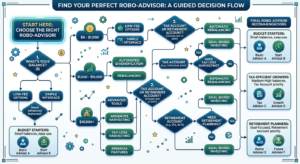
Step 1: Define Your Goals
Are you investing for retirement, a house, general wealth building, or education? Your goal influences account type and investment timeline.
Step 2: Check Your Starting Amount
If you have less than $500, platforms with $0 minimums (Betterment, SoFi, Fidelity Go, M1) are your best options.
Step 3: Decide on Fees vs. Features
Are you willing to pay 0.25% annually for tax-loss harvesting, human advisor access, and advanced features? Or do you prefer a free option with fewer bells and whistles?
Step 4: Consider Tax Situation
If you are investing in a taxable account with a significant balance, tax-loss harvesting can save real money. Wealthfront and Betterment excel here.
If you are investing only in IRAs, tax features do not matter—focus on fees and ease of use.
Step 5: Evaluate Existing Relationships
If you already bank with Ally, Schwab, Fidelity, or Vanguard, using their robo-advisor simplifies account management.
Common Robo-Advisor Mistakes to Avoid
Even with automation, you can still make mistakes.
Mistake 1: Choosing Based Only on Fees
The cheapest option is not always the best. A platform charging 0% but offering no tax optimization may cost you more in taxes than a 0.25% platform with excellent tax-loss harvesting.
Mistake 2: Ignoring Account Minimums
Do not choose a platform you cannot actually fund. If you only have $100, a $5,000 minimum eliminates that option.
Mistake 3: Setting It and Completely Forgetting It
While robo-advisors are designed to be hands-off, you should still review your account quarterly or annually to ensure it aligns with your goals, update your risk tolerance as life changes, and adjust contributions.
Mistake 4: Panicking During Market Drops
Robo-advisors are built for long-term investing. Withdrawing money during a market decline locks in losses. Trust the process and stay invested.
Mistake 5: Expecting Guaranteed Returns
Robo-advisors cannot guarantee profits. Markets go up and down. A well-diversified portfolio managed professionally has better odds than random stock picking, but there are no guarantees.
Robo-Advisors for Retirement Accounts
Many investors use robo-advisors specifically for retirement investing.
Traditional IRA vs. Roth IRA
Robo-advisors typically offer both account types. Remember, the IRS sets annual contribution limits: for 2026, total contributions to traditional and Roth IRAs are capped at $7,500, with an additional $1,100 catch-up contribution allowed for those 50 and older.
Choose a Roth IRA if you expect to be in a higher tax bracket in retirement. Choose a traditional IRA if you want a potential tax deduction now.
401(k) Rollovers
When you leave a job, you can roll your old 401(k) into an IRA managed by a robo-advisor. Most platforms make this process straightforward and guide you through the steps.
Frequently Asked Questions
Are robo-advisors worth it?
For many investors, yes. Robo-advisors provide professional portfolio management, automatic rebalancing, and often tax optimization at a fraction of the cost of human advisors. They work especially well for beginners and hands-off investors.
What is the best robo-advisor for beginners?
Betterment and SoFi are excellent for beginners due to $0 minimums, simple interfaces, and strong educational resources. Fidelity Go is also beginner-friendly with free management on balances under $25,000.
Do robo-advisors outperform the market?
No, most robo-advisors use passive index investing designed to match the market, not beat it. Their value comes from diversification, low costs, automatic rebalancing, and behavioral coaching—not outperformance.
Can you lose money with a robo-advisor?
Yes, robo-advisors invest in stocks, bonds, and other assets that can decline in value. Market risk remains. However, robo-advisors reduce the risk of poor individual investment choices through diversification.
What is the difference between a robo-advisor and a financial advisor?
A robo-advisor uses algorithms to manage your portfolio automatically. A human financial advisor provides personalized advice, financial planning, and ongoing guidance. Robo-advisors are cheaper but less personalized.
Should I use a robo-advisor for my emergency fund?
No. Emergency funds should be kept in safe, liquid accounts like high-yield savings or money market accounts—not invested. Use robo-advisors for long-term goals like retirement. For emergency savings, see our guide on .
Conclusion: Robo-Advisors Make Investing Accessible
Robo-advisors have transformed investing from something complicated and expensive into something simple and affordable. Whether you are starting with $100 or $100,000, there is a platform designed for your situation.
The best robo-advisor for you depends on your balance, goals, account type, and preferences. Betterment and Wealthfront excel for features and tax optimization. SoFi and M1 offer zero fees. Schwab and Vanguard provide institutional stability. Fidelity Go is perfect for small balances.
The most important step is not picking the absolute perfect platform—it is picking one and starting. Automated investing removes emotional decision-making, ensures consistent contributions, and builds wealth through the proven power of diversification and compounding.
Choose a platform, set up automatic contributions, and let your robo-advisor do the heavy lifting. Your future self will thank you.
Ready to start automated investing? Begin with our guide on , compare your options in , and make sure your financial foundation is strong with . Use or to free up money for consistent contributions, and learn so your investing becomes completely hands-free.
The best time to start was yesterday. The second-best time is today.
Disclaimer: This article is for informational and educational purposes only and does not constitute financial, investment, tax, or legal advice. Investing involves risk, including possible loss of principal. Robo-advisors cannot guarantee returns or protect against market losses. Consider consulting a qualified financial advisor before making investment decisions.