


Introduction
Zero Based Budget Have you ever reached the end of the month wondering where all your money went? You’re not alone. According to recent studies, nearly 65% of Americans live paycheck to paycheck, and the biggest culprit isn’t always low income—it’s the lack of a solid budgeting system.
Enter zero-based budgeting: a powerful money management strategy that gives every single dollar a specific job before you spend it. Unlike traditional budgeting where you simply track what you’ve already spent, zero-based budgeting forces you to plan ahead and make intentional decisions with your money.
In this comprehensive guide, I’ll walk you through exactly how to create a zero-based budget from scratch, even if you’ve never budgeted before. By the end of this article, you’ll have a complete system to take control of your finances, eliminate wasteful spending, and finally start making progress toward your financial goals. Make you master in Personal Finance Mastery.
What is Zero-Based Budgeting? Understanding the Basics
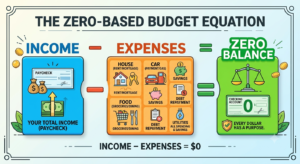
Zero-based budgeting is a budgeting method where your income minus your expenses equals zero. This doesn’t mean you spend every penny—it means you assign every dollar a specific purpose, whether that’s bills, savings, debt payment, or discretionary spending.
The formula is simple:
Income – Expenses = $0
Here’s what makes zero-based budgeting different from other budgeting methods: Instead of looking backward at what you spent, you’re looking forward at what you plan to spend. You’re being proactive instead of reactive with your money.
Why Zero-Based Budgeting Works So Well
Traditional budgeting often fails because it’s too vague. You might say, “I’ll try to spend less on eating out,” but without a specific dollar amount, that goal is meaningless.
Zero-based budgeting eliminates this vagueness. When you allocate $200 for groceries and $100 for dining out, you know exactly what you have to work with. Once that money is gone, it’s gone—forcing you to make conscious decisions about your spending.
This method also reveals spending leaks you didn’t know existed. When you have to justify every expense on paper before the month begins, those “small” $5 purchases that add up to hundreds suddenly become visible.
The Benefits of Zero-Based Budgeting in 2026
Before we get into the how-to, let’s talk about why you should adopt this budgeting strategy, especially in today’s economic climate.
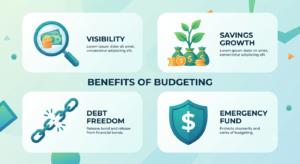
1. Complete Financial Visibility
With zero-based budgeting, there’s no mystery about your money. You know where every dollar is going before you earn it. This transparency is crucial for making informed financial decisions.
2. Eliminates Lifestyle Creep
As your income increases, your spending tends to increase proportionally—a phenomenon called lifestyle creep. Zero-based budgeting prevents this by forcing you to consciously decide what to do with any extra income, whether that’s investing, saving, or yes, even spending on things you value.
3. Accelerates Debt Payoff
When every dollar has a job, you can assign specific amounts toward debt repayment. This focused approach helps you pay off credit card debt, student loans, or any other obligations faster than traditional budgeting methods.
If you’re dealing with multiple debts, consider reading our guide on debt consolidation vs debt settlement to find the best strategy for your situation.
4. Builds Emergency Funds Faster
One of the jobs you’ll assign to your dollars is building your emergency fund. By making this a non-negotiable line item in your budget, you’ll consistently save until you reach your goal.
Not sure how much you need? Check out our article on how to build an emergency fund from scratch for specific recommendations based on your situation.
Step-by-Step: How to Create Your First Zero-Based Budget
Now that you understand what zero-based budgeting is and why it works, let’s create your first budget together. I’ll break this down into simple, actionable steps.
Step 1: Calculate Your Total Monthly Income
Start by figuring out exactly how much money you bring home each month after taxes. This is your “net income” or “take-home pay.”
If you have a regular salary, this is straightforward—just look at your paycheck stub. But if your income varies (freelancer, commission-based, seasonal work), calculate your average monthly income over the past 3-6 months, or use your lowest month to be conservative.
Include all income sources:
- Primary job salary/wages
- Side hustle income
- Freelance work
- Rental income
- Child support or alimony
- Investment dividends
- Any other regular income
For example, if you bring home $3,500 from your main job and $300 from a side hustle, your total monthly income is $3,800.
Pro tip: Only include income you’ve already earned or can absolutely count on. Don’t budget money you “hope” to make.
Step 2: List All Your Monthly Expenses
This is where most people get overwhelmed, but I’ll make it simple. Your expenses fall into four main categories:
Fixed Expenses (same amount every month):
- Rent/mortgage
- Car payment
- Insurance (health, auto, life, renters/homeowners)
- Phone bill
- Internet
- Streaming services
- Gym membership
- Loan payments
Variable Expenses (amount changes monthly):
- Groceries
- Gas/transportation
- Utilities (electric, water, gas)
- Household items
- Personal care
- Clothing
Periodic Expenses (don’t occur monthly):
- Car registration
- HOA fees (if quarterly/annually)
- Amazon Prime membership
- Annual subscriptions
- Holiday gifts
- Car maintenance
Discretionary Spending:
- Dining out/takeout
- Entertainment
- Hobbies
- Shopping
- Coffee/snacks
Financial Goals:
- Emergency fund
- Debt payoff beyond minimums
- Savings for specific goals (vacation, home down payment)
- Retirement contributions
- Investments

Step 3: Assign Every Dollar a Job
Now comes the heart of zero-based budgeting. Take your total income and start subtracting each expense until you reach zero.
Let me show you an example with our $3,800 income:
Income: $3,800
Fixed Expenses:
- Rent: $1,200
- Car payment: $350
- Car insurance: $120
- Phone: $65
- Internet: $50
- Streaming services: $25
- Student loan minimum: $150
Variable Expenses:
- Groceries: $400
- Gas: $150
- Utilities: $120
- Household items: $50
- Personal care: $40
Discretionary:
- Dining out: $150
- Entertainment: $80
- Hobbies: $50
Financial Goals:
- Emergency fund: $300
- Extra debt payment: $200
- Retirement (401k): $250
Total Expenses: $3,800
Income – Expenses = $0
Notice how every single dollar has been assigned? That’s zero-based budgeting in action.
Step 4: Choose Your Budgeting
You can create a zero-based budget using:
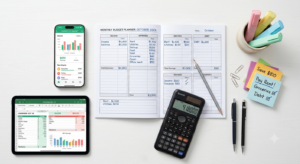
- Pen and paper – The simplest method, great for beginners
- Spreadsheet – Excel or Google Sheets templates offer more flexibility
- Budgeting apps – Digital tools like YNAB (You Need A Budget), Every Dollar, or Good budget are specifically designed for zero-based budgeting
For a detailed comparison of the best options available right now, read our article on the 15 best budgeting apps in 2026.
There’s no “best” tool—only the one you’ll actually use consistently. I recommend starting simple with a notebook or spreadsheet before investing in paid apps.

Step 5: Track Your Spending Throughout the Month
Creating the budget is just the beginning. The real magic happens when you track your actual spending against your planned budget.
Here’s how to track effectively:
- Save all receipts (physical or digital)
- Log expenses daily or at least every few days
- Check your budget before making purchases to ensure you have money allocated
- Adjust categories as needed if you overspend in one area, reduce another (keeping the total at zero)
This is where most budgets fail—people create beautiful budgets but never track if they’re following them. Tracking keeps you accountable.
Step 6: Reconcile and Adjust at Month’s End
At the end of the month, review what happened:
- Where did you overspend?
- Where did you underspend?
- Were your estimates accurate?
- What surprised you?
Use this information to create next month’s budget. Zero-based budgeting gets easier and more accurate the longer you do it because you’ll learn your actual spending patterns.
Common Zero-Based Budgeting Mistakes (And How to Avoid Them)
Even with the best intentions, people make mistakes when starting zero-based budgeting. Here are the most common ones:
Mistake #1: Forgetting Irregular Expenses
Car registration, annual subscriptions, holiday gifts—these sneak up on you. Create a “sinking fund” by dividing annual expenses by 12 and setting aside that amount monthly.
Example: If you spend $600 on holiday gifts annually, budget $50/month into a holiday fund.
Mistake #2: Being Too Restrictive
If your budget feels like punishment, you won’t stick with it. Include reasonable amounts for fun and discretionary spending. A sustainable budget is better than a perfect one you abandon after two weeks.
Mistake #3: Not Building in Buffer Categories
Life is unpredictable. Create a “miscellaneous” or “buffer” category with $50-100 for unexpected small expenses that don’t warrant touching your emergency fund.
Mistake #4: Giving Up After One Bad Month
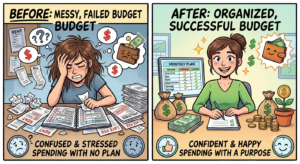
Your first month will be rough. You’ll forget expenses, underestimate costs, and probably blow a few categories. That’s normal! Each month gets better as you refine your system.
Zero-Based Budget Template: Your Starting Point
Here’s a simple zero-based budget template you can customize:
INCOME
- Salary/Wages: $_______
- Side Income: $_______
- Other Income: $_______
- TOTAL INCOME: $_______
GIVING/DONATIONS
- Charity: $_______
- Tithes: $_______
SAVING
- Emergency Fund: $_______
- Retirement: $_______
- Goal Savings: $_______
HOUSING
- Rent/Mortgage: $_______
- Utilities: $_______
- Internet/Cable: $_______
- Home Maintenance: $_______
TRANSPORTATION
- Car Payment: $_______
- Gas: $_______
- Insurance: $_______
- Maintenance: $_______
FOOD
- Groceries: $_______
- Restaurants: $_______
PERSONAL
- Clothing: $_______
- Phone: $_______
- Hair/Beauty: $_______
- Gym: $_______
- Subscriptions: $_______
DEBT PAYMENTS
- Credit Cards: $_______
- Student Loans: $_______
- Personal Loans: $_______
ENTERTAINMENT
- Fun Money: $_______
- Hobbies: $_______
- Subscriptions: $_______
MISCELLANEOUS
- Buffer: $_______
TOTAL EXPENSES: $_______
INCOME – EXPENSES = $0
Tools and Resources to Master Zero-Based Budgeting
Free Budget Calculators
Several websites offer free zero-based budget calculators that do the math for you. Simply input your income and expenses, and the calculator shows if you’ve reached zero.
Printable Budget Templates
If you prefer paper budgeting, download printable zero-based budget templates. Many personal finance blogs offer these for free.
Budget Tracking Apps
Apps like YNAB (You Need A Budget) are built specifically around zero-based budgeting principles. While they typically cost $10-15/month, the ROI can be significant if you’re serious about controlling your finances.
For more budget-friendly options, check out our comprehensive review of digital money management tools that can help automate parts of your budgeting process.
How Zero-Based Budgeting Works with Other Money Strategies
Zero-based budgeting isn’t an island—it works beautifully alongside other financial strategies.
Zero-Based Budgeting + The 50/30/20 Rule
You can use the 50/30/20 rule (50% needs, 30% wants, 20% savings/debt) as a framework for allocating your dollars in a zero-based budget. This gives you guardrails while still assigning every dollar.
Want to learn more about this approach? Read our detailed guide on the 50/30/20 budget rule to see if it’s right for you.
Zero-Based Budgeting + Debt Snowball
Zero-based budgeting helps you identify exactly how much extra money you can throw at debt each month. This pairs perfectly with the debt snowball or debt avalanche methods.
If you’re serious about eliminating debt, our article on how to pay off credit card debt fast provides seven proven strategies that work with zero-based budgeting.
Zero-Based Budgeting + Automated Savings
Even though you’re manually planning where each dollar goes, you can still automate the execution. Set up automatic transfers for savings, investments, and bill payments based on your zero-based budget allocations.
Real-Life Zero-Based Budgeting Success Stories
Understanding the theory is one thing, but seeing real results is what motivates action. Here are common outcomes people experience:
Scenario 1: Finding Hidden Money Many people discover $200-500 per month in “spending leaks” when they start zero-based budgeting. These are small, forgotten subscriptions and mindless purchases that add up.
Scenario 2: Paying Off Debt Faster By clearly seeing where discretionary dollars can be redirected, people often accelerate debt payoff by 40-60% compared to making minimum payments.
Scenario 3: Building Emergency Funds What seemed impossible—saving $1,000 or even $10,000—becomes achievable when you allocate specific amounts monthly and treat savings as a non-negotiable “expense.”
For a step-by-step plan to reach that first major savings milestone, read our guide on how to save $10,000 in one year.
Frequently Asked Questions About Zero-Based Budgeting
What if I have irregular income?
Use your lowest-earning month as your baseline budget. Any extra income in higher-earning months gets immediately assigned to priority categories like emergency fund, debt payoff, or savings goals.
Do I really need to budget every single dollar?
Yes, that’s the core principle. But this includes allocating money to “fun” categories, savings, and even a buffer for miscellaneous expenses. Every dollar needs a name, even if that name is “spending money” or “miscellaneous.”
What if I overspend in a catagory
Move money from another category to cover it, keeping your total at zero. For example, if you overspent on groceries by $30, reduce your entertainment budget by $30. This forces trade-off decisions.
How long does zero-based budgeting take each month?
Initial setup: 2-3 hours Monthly budgets after that: 30-60 minutes Daily tracking: 5-10 minutes
The time investment pays dividends in financial clarity and control.
Can I use zero-based budgeting if I have a partner?
Absolutely! In fact, zero-based budgeting often improves couple’s finances because it forces communication about money goals and priorities. Schedule a monthly “budget meeting” together.
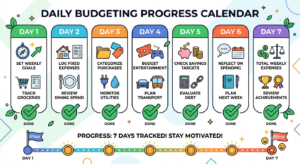
Taking Action: Your 7-Day Zero-Based Budget Challenge
Ready to start? Here’s a week-by-week action plan:
Day 1: Calculate your total monthly income Day 2: List all fixed expenses Day 3: Estimate variable expenses (review last month’s bank statements) Day 4: Add periodic expenses (calculate monthly amounts) Day 5: Decide on financial goals and amounts Day 6: Assign all remaining dollars to categories until you reach zero Day 7: Choose your tracking method and do a practice run
By the end of the week, you’ll have your first complete zero-based budget ready for next month.
Conclusion: Your Path to Financial Freedom Starts with Zero
Zero-based budgeting isn’t just about tracking pennies—it’s about taking complete control of your financial future. When you give every dollar a specific job, you eliminate wasteful spending, accelerate progress toward goals, and remove the mystery and stress around money.
Is it more work than mindlessly swiping your card? Initially, yes. But within 2-3 months, zero-based budgeting becomes second nature. The clarity, control, and confidence you gain are worth every minute invested.
Remember: The goal isn’t perfection. Your first budget won’t be perfect, and neither will your tenth. But each month you’ll get better at estimating, tracking, and allocating your money in ways that align with your values and goals.
Start today. Calculate your income, list your expenses, and assign every dollar a job. Your future self—the one who’s debt-free, has a fully-funded emergency fund, and sleeps soundly knowing exactly where their money is—will thank you.
Other ideas
https://finance4you.online/50-30-20-budget-rule-explained/
https://finance4you.online/best-budgeting-apps/
https://finance4you.online/how-to-track-expenses/
https://finance4you.online/how-to-automate-your-finances/
Ready to take the next step in your financial journey? Explore our other budgeting strategies in the 50/30/20 budget rule guide, discover the best budgeting apps for 2026, or learn how to track your expenses effectively to make your zero-based budget even more powerful.
What will you do with your newfound financial control?