
Introduction
If you’re drowning in debt, you’ve probably come across two terms that sound similar but are actually worlds apart: debt consolidation and debt settlement. Both promise relief, both claim to help you regain control of your finances, and both are heavily advertised. But choosing the wrong one could cost you thousands of dollars and wreck your credit score for years.
Here’s the problem: these two strategies work in completely different ways, carry very different risks, and are designed for very different financial situations. What’s a smart move for one person could be a costly mistake for another. Yet many people confuse the two or choose based on a flashy ad rather than an informed understanding of how each one actually works.
That’s exactly what this guide will fix. I’ll break down precisely what debt consolidation and debt settlement are, how each one works, their real pros and cons, and—most importantly—how to figure out which option (if either) is right for your unique situation. No jargon, no sales pitch, just clear, honest information to help you make a confident decision. between Debt Consolidation vs Debt Settlement which is better.
By the end of this article, you’ll understand these two debt relief options inside and out, so you can choose the path that gets you to debt freedom without unnecessary damage along the way. Let’s dive in.
Understanding the Basics: What Are We Really Comparing?
Before we pit these two strategies against each other, it’s important to understand that they solve the debt problem in fundamentally different ways.
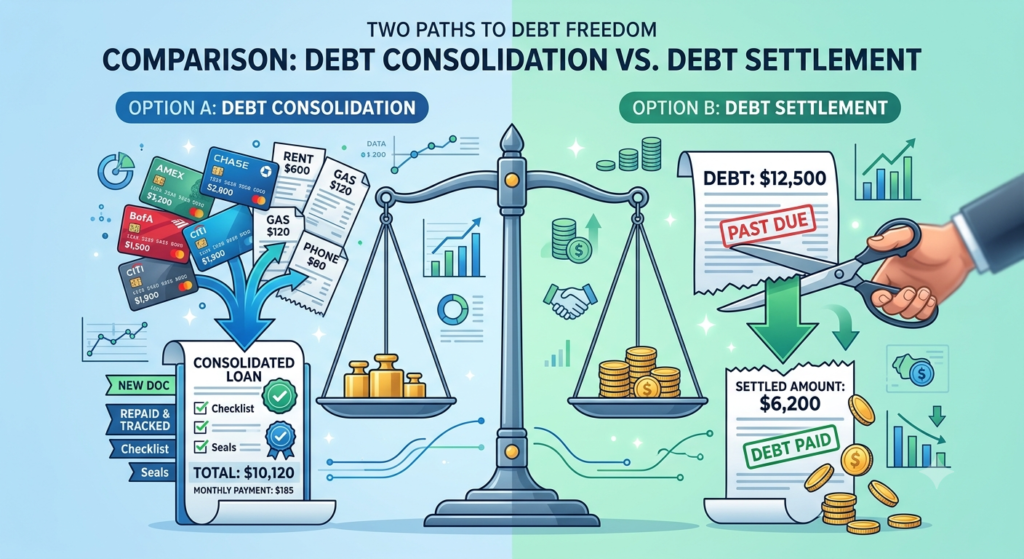
Debt consolidation is about reorganizing your debt to make it easier and cheaper to pay off—but you still pay back everything you owe. Debt settlement, on the other hand, is about negotiating to pay back less than what you owe, typically because you can’t afford to pay the full amount.
Think of it this way: consolidation is a tool for people who can manage their payments but want a simpler, more affordable structure. Settlement is a last-resort option for people who are already struggling to pay and are facing serious financial hardship.
Keep this core difference in mind as we explore each option in detail.
What Is Debt Consolidation?
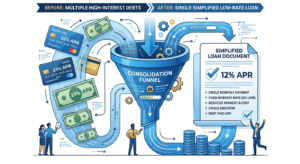
Debt consolidation is the process of combining multiple debts into a single new loan or payment—ideally with a lower interest rate. Instead of juggling several credit card bills, personal loans, and other debts with different due dates and interest rates, you roll them all into one manageable monthly payment.
How Debt Consolidation Works
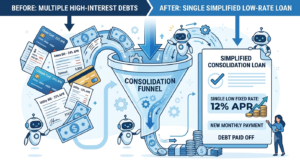
The concept is straightforward. You take out a new loan large enough to pay off your existing debts. Once those debts are paid off, you’re left with just one loan to repay—hopefully at a lower interest rate and with a single, predictable monthly payment.
For example, imagine you have three credit cards with balances of $3,000, $4,000, and $3,000, each charging around 22% interest. You could take out a single consolidation loan of $10,000 at 12% interest, pay off all three cards, and then focus on repaying just that one loan at a much lower rate.
Common Debt Consolidation Methods
There are several ways to consolidate your debt, each with its own advantages:
Personal Consolidation Loans — You borrow a fixed amount from a bank, credit union, or online lender to pay off your debts, then repay the loan in fixed monthly installments. To learn how to secure the best terms, read our guide on how to get the best personal loan rates.
Balance Transfer Credit Cards — You transfer high-interest credit card balances to a new card offering a 0% introductory APR, giving you a window (often 12-21 months) to pay down the balance interest-free.
Home Equity Loans — Homeowners can borrow against their home’s equity to pay off debt, usually at lower interest rates. However, this puts your home at risk if you can’t repay.
Debt Management Plans — Offered through credit counseling agencies, these plans consolidate your payments and often negotiate lower interest rates with your creditors.
Who Debt Consolidation Is Best For
Debt consolidation works best if you have a steady income, a decent credit score, and the ability to make consistent payments—but you’re struggling with high interest rates or the complexity of managing multiple debts. It’s ideal for people who want to simplify their finances and save on interest while still paying back everything they owe.
What Is Debt Settlement?
Debt settlement is a very different approach. Instead of reorganizing your debt, you (or a company acting on your behalf) negotiate with your creditors to accept less than the full amount you owe. The goal is to settle the debt for a reduced lump-sum payment.
How Debt Settlement Works
Debt settlement typically works like this: you stop making payments to your creditors and instead put money into a dedicated savings account each month. Once you’ve accumulated a significant amount, a settlement company (or you) approaches your creditors and offers a lump sum that’s less than the total balance—say, 40-60 cents on the dollar—to consider the debt paid in full.
Creditors sometimes accept these offers because they’d rather recover part of the debt than risk getting nothing if you file for bankruptcy. For example, if you owe $10,000, a creditor might agree to settle for $5,000 as a one-time payment.
The Serious Risks of Debt Settlement
While settling debt for less than you owe sounds appealing, this option comes with significant downsides that you must understand:
Major Credit Damage — Because you stop making payments during the process, your credit score can drop dramatically. Missed payments and settled accounts stay on your credit report for up to seven years.
No Guarantee of Success — Creditors are not obligated to negotiate or accept any settlement offer. You could stop paying, damage your credit, and still not reach a settlement.
Accumulating Fees and Interest — While you’re not paying your creditors, interest and late fees continue to pile up, increasing your total balance.
Tax Consequences — The IRS often considers forgiven debt as taxable income. If $5,000 of your debt is forgiven, you may owe taxes on that amount.
Expensive Company Fees — Debt settlement companies typically charge fees of 15-25% of the enrolled debt or the amount saved, which eats into your savings.
Who Debt Settlement Is Best For
Debt settlement is generally a last-resort option for people facing serious financial hardship who are already behind on payments and considering bankruptcy. If you genuinely cannot afford to pay your debts in full and are already struggling, settlement might be worth exploring—but only after understanding the risks,
Debt Consolidation vs Debt Settlement: Head-to-Head Comparison
Now that you understand each option individually, let’s compare them directly across the factors that matter most.
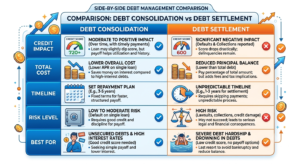
Impact on Your Credit Score
Debt Consolidation: Generally has a neutral to positive long-term effect. There may be a small temporary dip from the hard credit inquiry when applying, but making consistent payments on your consolidation loan can actually improve your credit over time. Want to boost your score? Check out our guide on how to improve your credit score in 90 days.
Debt Settlement: Causes significant, lasting damage. Missed payments and settled accounts severely lower your score and remain on your credit report for up to seven years.
Winner: Debt consolidation, by a wide margin.
Total Amount You’ll Pay
Debt Consolidation: You pay back the full amount you owe, but you save money through lower interest rates. Your total cost is typically less than continuing with high-interest debt.
Debt Settlement: You pay back less than you owe—potentially saving a substantial amount on the principal. However, fees, accumulated interest, and taxes on forgiven debt can offset a large portion of those savings.
Winner: It depends. Settlement can reduce your principal, but the hidden costs make the real savings smaller than they appear.
Time to Become Debt-Free
Debt Consolidation: Typically 2-7 years, depending on your loan term and how aggressively you pay it down.
Debt Settlement: Usually 2-4 years, but with no guarantee of success and significant uncertainty along the way.
Winner: Roughly comparable, though consolidation offers more predictability.
Risk Level
Debt Consolidation: Lower risk. Your credit stays intact, and you have a clear repayment plan. The main risk is running up new debt on the cards you paid off.
Debt Settlement: High risk. You could damage your credit, face tax bills, deal with creditor lawsuits, and still fail to settle.
Winner: Debt consolidation.
Best For
Debt Consolidation: People with steady income and decent credit who can afford payments but want lower rates and simplicity.
Debt Settlement: People in genuine financial hardship who are already behind and can’t afford to pay in full.
Pros and Cons at a Glance
Let’s summarize the key advantages and disadvantages of each option so you can weigh them clearly.
Debt Consolidation Pros
- Simplifies multiple debts into one payment
- Often lowers your interest rate, saving money
- Neutral to positive impact on your credit score
- Predictable, fixed monthly payments
- Can help you pay off debt faster
Debt Consolidation Cons
- Requires decent credit to qualify for good rates
- Doesn’t reduce the principal you owe
- Risk of running up new debt if you’re not disciplined
- Some options (like home equity loans) put assets at risk
Debt Settlement Pros
- Can reduce the total principal you owe
- May help you avoid bankruptcy
- Provides a path forward when you truly can’t pay
Debt Settlement Cons
- Severely damages your credit for up to seven years
- No guarantee creditors will agree to settle
- Forgiven debt may be taxed as income
- High company fees eat into your savings
- Interest and late fees accumulate during the process
- Risk of creditor lawsuits
How to Decide Which Option Is Right for You
Choosing between these two strategies comes down to honestly assessing your financial situation. Ask yourself these questions.
Can You Afford Your Monthly Payments?
If you can comfortably make payments but are frustrated by high interest rates and multiple bills, debt consolidation is almost certainly your better choice. If you genuinely cannot afford even minimum payments and are already falling behind, settlement may be worth considering.
What’s Your Credit Score?
Debt consolidation requires reasonably good credit to qualify for a loan with favorable terms. If your credit is still in decent shape, protect it by consolidating. If your credit is already badly damaged and you’re in crisis, the additional damage from settlement may be less of a concern.
How Severe Is Your Financial Hardship?
Consolidation is for people managing their debt who want a better structure. Settlement is a crisis tool for people facing genuine hardship, such as job loss, medical emergencies, or income that simply can’t cover the debt.
Have You Explored All Alternatives?
Before choosing either option, make sure you’ve considered other approaches. Sometimes a solid budget and an aggressive payoff strategy can solve the problem without either option. Learn proven techniques in our guide on how to pay off credit card debt fast. Building a strong budget first—using methods like the 50/30/20 rule—can also reveal money you didn’t know you had for debt payments.
Better Alternatives to Consider First
Before committing to consolidation or settlement, it’s worth exploring these alternatives that might solve your debt problem with less cost and risk.
The Debt Snowball or Debt Avalanche Method
These DIY payoff strategies require no loans or negotiations. With the snowball method, you pay off your smallest debts first for quick wins and motivation. With the avalanche method, you target your highest-interest debts first to save the most money. Both are powerful, free strategies covered in detail in our credit card debt payoff guide.
Credit Counseling
Nonprofit credit counseling agencies offer free or low-cost guidance and can set up a debt management plan on your behalf. They may negotiate lower interest rates with your creditors without the credit damage of settlement.
Balance Transfer Cards
If your debt is primarily on high-interest credit cards and your credit is decent, a 0% APR balance transfer card can give you a valuable interest-free window to aggressively pay down your balance.
Building a Stronger Budget
Sometimes the real solution is finding more room in your budget. By tracking your spending and cutting unnecessary expenses, you may free up enough money to tackle your debt directly. Start with our guide on how to track your expenses effectively.
Other ideas
https://finance4you.online/student-loan-forgiveness-guide/
https://finance4you.online/best-personal-loan-rates/
https://finance4you.online/how-to-improve-credit-score/
https://finance4you.online/how-to-pay-off-credit-card-debt-fast/
Frequently Asked Questions
Is debt consolidation or debt settlement better for my credit?
Debt consolidation is far better for your credit. It has a neutral to positive long-term effect, and consistent payments can actually improve your score. Debt settlement, on the other hand, causes significant damage that can stay on your credit report for up to seven years.
Does debt settlement really work?
Debt settlement can work, but success isn’t guaranteed. Creditors are under no obligation to accept a settlement offer. Even when it works, the credit damage, fees, and potential taxes on forgiven debt mean the real savings are often smaller than advertised.
Will debt consolidation lower my monthly payment?
It often can. By combining your debts into a single loan with a lower interest rate or a longer repayment term, debt consolidation frequently reduces your monthly payment. Just be aware that extending the term too long can increase the total interest you pay over time.
Can I do debt settlement myself without a company?
Yes, you can negotiate with creditors on your own, which avoids the hefty fees charged by settlement companies. However, it requires confidence, negotiation skills, and a lump sum of cash ready to offer. Many people find DIY settlement challenging but potentially rewarding if done carefully.
What credit score do I need for debt consolidation?
Requirements vary by lender, but generally you’ll want a credit score in the mid-600s or higher to qualify for a consolidation loan with a favorable interest rate. The better your score, the lower the rate you’ll be offered. If your score needs work, our credit score improvement guide can help.
Are there tax consequences with debt settlement?
Yes, this is an important and often overlooked downside. The IRS generally treats forgiven debt as taxable income. If a creditor forgives $5,000 of your debt, you may receive a 1099-C form and owe taxes on that amount. Always factor this into your decision.
Conclusion: Making the Right Choice for Your Financial Future
When it comes to debt consolidation vs debt settlement, there’s no one-size-fits-all answer—but there is a right answer for your specific situation. The key is understanding that these two strategies serve very different needs.
For most people who are managing their payments but want to save on interest and simplify their finances, debt consolidation is the clear winner. It protects your credit, provides predictable payments, and helps you pay off what you owe more efficiently. It’s a smart, low-risk tool for regaining control.
Debt settlement, meanwhile, should be viewed as a last resort—reserved for those facing genuine financial hardship who simply cannot pay their debts in full and are staring down the possibility of bankruptcy. While it can reduce your principal, the serious credit damage, fees, taxes, and uncertainty make it a risky path that shouldn’t be your first choice.
Whatever you decide, remember that debt is a solvable problem. Thousands of people become debt-free every single day using the right strategy for their situation. Take an honest look at your finances, explore all your options—including the alternatives we discussed—and choose the path that gets you to freedom with the least damage along the way.
Ready to take the next step toward becoming debt-free? Start by learning proven payoff strategies in our guide on how to pay off credit card debt fast, discover how to get the best personal loan rates if you’re considering consolidation, or work on improving your credit score in 90 days to unlock better options. Your journey to financial freedom starts with one informed decision today.