
Introduction
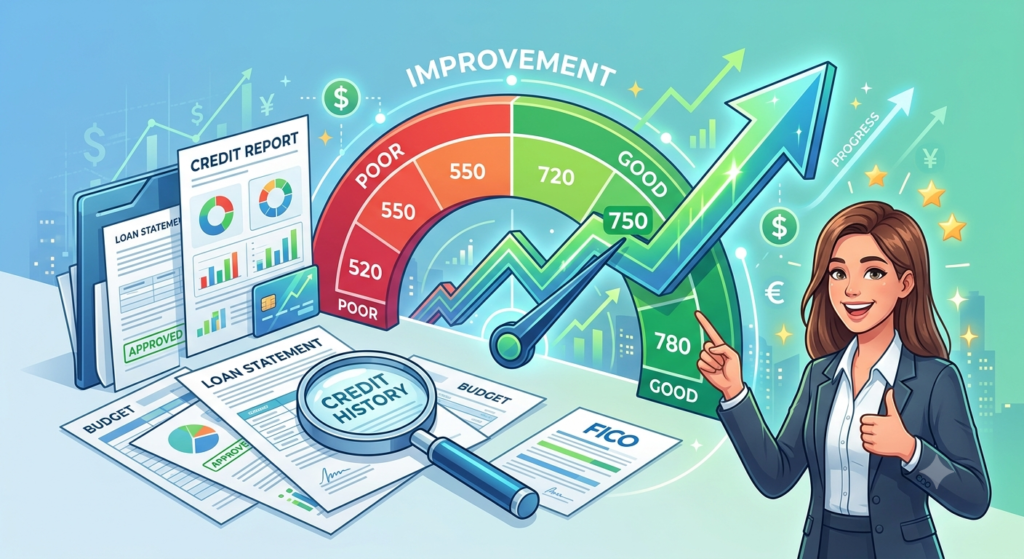
Your credit score is one of the most powerful yet invisible forces shaping your financial life. It quietly determines whether you’ll get approved for a loan, what interest rate you’ll pay, and even whether a landlord will rent to you. A strong credit score can save you tens of thousands of dollars over your lifetime. A poor score? It locks you out of opportunities and costs you money every single month.
Here’s the frustrating part: most people don’t really understand what their credit score is, how it’s calculated, or what they can do to improve it. There’s so much misinformation out there—myths about closing credit cards, paying off collections, or checking your own score—that it’s easy to feel overwhelmed and confused.
But here’s the empowering truth: improving your credit score isn’t mysterious or complicated once you understand how the system actually works. It doesn’t require magic or expensive “credit repair” services. With the right strategies, you can make meaningful improvements in as little as 90 days, and dramatic changes over six months to a year.
In this comprehensive guide, I’ll break down exactly what affects your credit score, the proven strategies that actually work to improve it, and the specific actions you can take starting today to boost your score. Whether you’re recovering from financial mistakes or simply trying to optimize a decent score, you’ll have a clear roadmap to better credit by the end of this article.https://finance4you.online/debt-consolidation-vs-debt-settlement/
Let’s get started. How to improve credit score
Understanding Your Credit Score: The Foundation
Before you can improve your credit score, you need to understand what it is and how it’s calculated. This knowledge is the foundation of every strategy that follows.
What Is a Credit Score?
Your credit score is a three-digit number (typically ranging from 300 to 850) that represents your creditworthiness—essentially, how likely you are to repay borrowed money. Lenders, landlords, insurance companies, and even some employers use this number to make decisions about you.
The most commonly used credit scores are FICO scores and VantageScore. While they use slightly different formulas, they generally produce similar results and are based on the information in your credit reports from the three major credit bureaus: Equifax, Experian, and TransUnion.
Credit Score Ranges: Where Do You Stand?
Credit scores are typically grouped into these ranges:
- Exceptional (800-850): You’re in elite company with excellent credit
- Very Good (740-799): You’ll qualify for most loans at favorable rates
- Good (670-739): You’re above average and will get decent terms
- Fair (580-669): You may struggle to get approved or face higher rates
- Poor (300-579): Credit approval will be difficult and expensive
Understanding your starting point helps you set realistic expectations for improvement.
The Five Factors That Determine Your Score
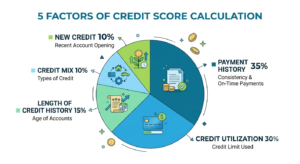
Your credit score isn’t random—it’s calculated based on five specific factors, each weighted differently:
Payment History (35%) — Your track record of paying bills on time. This is the single biggest factor affecting your score.
Credit Utilization (30%) — How much of your available credit you’re using. Lower is better.
Length of Credit History (15%) — How long you’ve had credit accounts. Longer history helps.
Credit Mix (10%) — The variety of credit types you have (credit cards, auto loans, mortgages, etc.).
New Credit (10%) — Recent applications and newly opened accounts.
Understanding these percentages reveals where to focus your efforts for maximum impact.
How to Check Your Credit Score and Report
You can’t improve what you don’t measure. Your first step is getting a clear picture of where you currently stand.
Get Your Free Credit Reports
You’re entitled to one free credit report from each of the three major bureaus every year through AnnualCreditReport.com, the only federally authorized source. Many experts recommend staggering these throughout the year—pulling one report every four months—to monitor your credit consistently.
Check Your Credit Score for Free
Many banks, credit card issuers, and financial apps now offer free credit score monitoring. Services like Credit Karma, Credit Sesame, and apps from major credit card companies provide regular score updates at no cost. While these might not be your exact FICO score used by lenders, they’re close enough to track your progress.
Review Your Reports Carefully
Once you have your reports, examine them thoroughly. Look for errors, accounts you don’t recognize, incorrect balances, or negative items that shouldn’t be there. Errors are surprisingly common, and fixing them can provide a quick score boost.
Strategy 1: Always Pay Your Bills on Time (35% Impact)
Since payment history accounts for 35% of your credit score, this is your most important priority. Nothing affects your score more dramatically than payment behavior.
Why On-Time Payments Matter So Much
Every time you pay a bill 30 days or more late, it can be reported to the credit bureaus and damage your score. Just one late payment can drop your score by 50-100 points, and the impact lasts for up to seven years. Conversely, consistently paying on time gradually improves your score and demonstrates reliability to lenders.
Set Up Automatic Payments
The easiest way to never miss a payment is to automate them. Set up autopay for at least the minimum payment on all your credit accounts, even if you plan to pay more manually. This safety net ensures you’ll never accidentally miss a due date. Learn more about setting up automated payments in our guide on how to automate your finances.
Use Payment Reminders
If you prefer not to automate fully, set up calendar alerts or use budgeting apps that remind you of upcoming due dates. Most credit card companies also offer text or email reminders a few days before your payment is due.
What If You’ve Already Missed Payments?
If you have late payments on your record, don’t panic. Their impact diminishes over time, especially as you build a pattern of on-time payments going forward. Focus on being perfect from today onward—consistent positive behavior will eventually outweigh past mistakes.
https://finance4you.online/best-personal-loan-rates/
Strategy 2: Lower Your Credit Utilization Ratio (30% Impact)
Credit utilization is the second most important factor in your score, and it’s one of the fastest to improve. This is the percentage of your available credit that you’re currently using.
Understanding Credit Utilization
If you have a credit card with a $5,000 limit and a $1,500 balance, your utilization on that card is 30%. Credit scoring models prefer to see you using less than 30% of your available credit, with under 10% being ideal. High utilization suggests you’re overextended or overly reliant on credit.
Pay Down Your Balances
The most effective way to improve your utilization is to pay down your existing balances. Even small reductions help. If you’re carrying high balances, consider using strategies from our guide on how to pay off credit card debt fast to accelerate your progress.
Make Multiple Payments Per Month
Here’s an insider tip: your credit card company typically reports your balance to the credit bureaus once a month, usually on your statement closing date. By making payments throughout the month—not just once—you can keep your reported balance lower even if you use your card regularly.
Request Credit Limit Increases
Increasing your credit limit while keeping your balance the same automatically lowers your utilization percentage. Many credit card companies will grant limit increases to customers with good payment history—sometimes you can request one online in minutes. Just be careful not to use the extra credit to increase your spending.
Avoid Closing Old Credit Cards
When you close a credit card, you lose that available credit, which can increase your overall utilization ratio. Unless the card has an annual fee you can’t justify or you genuinely can’t trust yourself not to use it, keep old cards open even if you don’t use them much.
Strategy 3: Fix Errors on Your Credit Report
Credit report errors are shockingly common. Studies suggest that up to one in five credit reports contain errors that could negatively impact your score. Fixing these mistakes can provide a quick, significant score boost.
Common Credit Report Errors to Look For
As you review your reports, watch for these common issues:
- Accounts that don’t belong to you
- Incorrect account balances or credit limits
- Late payments incorrectly reported as late
- Accounts listed as open that you’ve closed
- Duplicate accounts showing the same debt twice
- Incorrect personal information
How to Dispute Credit Report Errors
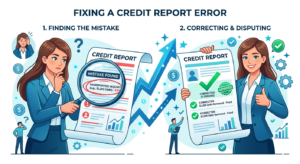
If you find errors, you have the right to dispute them. Contact the credit bureau that’s reporting the error through their dispute process (available online, by mail, or by phone). Provide documentation supporting your claim. The bureau must investigate within 30 days and remove or correct any information they can’t verify.
You should also contact the creditor who reported the error and ask them to correct it with all three bureaus. This two-pronged approach often resolves issues faster.
Strategy 4: Be Strategic About New Credit Applications
Every time you apply for credit, it can affect your score. Understanding how to manage new credit applications helps you avoid unnecessary damage.
Hard Inquiries vs Soft Inquiries
When you apply for credit, the lender performs a “hard inquiry” to check your credit, which can lower your score by a few points. Multiple hard inquiries in a short time signal that you might be desperate for credit, which concerns lenders. However, “soft inquiries”—like checking your own score or pre-qualification checks—don’t affect your score at all.
Rate Shopping Done Right
If you’re shopping for a mortgage, auto loan, or student loan, credit scoring models understand you’re comparing rates. Multiple inquiries for the same type of loan within a 14-45 day window are typically counted as a single inquiry. Take advantage of this by doing all your rate shopping in a short, concentrated period.
Avoid Opening Too Many Accounts at Once
While you shouldn’t be paralyzed by fear of hard inquiries, avoid opening multiple new credit accounts in a short period. This looks risky to lenders and can temporarily lower your score. Space out new applications and only apply when you genuinely need the credit.
Strategy 5: Keep Old Accounts Open
The length of your credit history accounts for 15% of your score, and older accounts help you in this area.
Age of Credit Matters
Credit scoring models look at the age of your oldest account, the average age of all your accounts, and how long specific accounts have been established. Longer credit history generally means a higher score because it provides more data about your financial behavior.
Don’t Close Your Oldest Cards
Your oldest credit card is particularly valuable to your credit history. Even if you don’t use it often, keep it open. Consider making a small purchase on it occasionally and paying it off immediately to keep the account active.
The Exception: Cards With Expensive Fees
The main exception to the “keep cards open” rule is if a card charges an annual fee you can’t justify. In that case, call the issuer and ask if they can convert it to a no-fee version of the card. This preserves your credit history without the ongoing cost.
https://finance4you.online/student-loan-forgiveness-guide/
Strategy 6: Diversify Your Credit Mix
While credit mix only accounts for 10% of your score, having a variety of credit types can help, especially if you have a thin credit file.
Types of Credit Accounts
Credit scoring models distinguish between different types of credit:
- Revolving credit (credit cards, lines of credit)
- Installment loans (auto loans, personal loans, mortgages, student loans)
- Open accounts (utility bills, cell phone contracts)
Having a mix of these shows you can responsibly manage different types of credit obligations.
How to Improve Your Credit Mix Without Risk
Don’t open new accounts solely to improve your mix—the potential benefit isn’t worth a hard inquiry and the risk of debt. However, if you’re planning to make a major purchase anyway (like a car), financing it responsibly can help diversify your credit. Just make sure you can easily afford the payments. If you’re considering a personal loan, learn how to get the best personal loan rates to minimize the cost.
Strategy 7: Deal With Collections and Negative Items
If you have collections, charge-offs, or other negative items on your credit report, they’re significantly hurting your score. While you can’t erase accurate negative information instantly, you have options to minimize the damage.
Understand What Stays and What Goes
Most negative information stays on your credit report for seven years from the date of the original delinquency. Bankruptcies can stay for up to 10 years. However, as these items age, their impact on your score gradually decreases, especially if you build positive history in the meantime.
Pay for Delete: Worth Trying
When dealing with collection agencies, you can sometimes negotiate a “pay for delete” agreement where the collector agrees to remove the negative item from your report in exchange for payment. This isn’t guaranteed—collectors aren’t required to agree—but it’s worth requesting. Get any agreement in writing before you pay.
Consider Goodwill Adjustments
If you have an isolated late payment on an otherwise excellent record, you can write a “goodwill letter” to your creditor explaining the circumstances and asking them to remove the late payment as a courtesy. This doesn’t always work, but when it does, the score boost can be substantial.
Focus on New Positive History
Even if you can’t remove negative items, you can outweigh them with new positive information. As you build a pattern of on-time payments and responsible credit use, your score will improve despite the old negative marks.
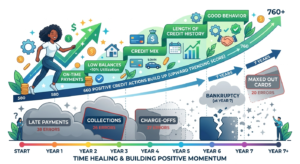
How Long Does It Take to Improve Your Credit Score?
One of the most common questions is: how fast can I actually see results? The answer depends on your starting point and which strategies you use.
Quick Wins (30-60 Days)
Some improvements show up relatively quickly:
- Paying down high balances to reduce utilization can boost your score within one billing cycle
- Fixing errors on your credit report can show improvement within 30 days after correction
- Having a high balance reported as paid off reflects in your next statement cycle
Moderate Improvements (90 Days to 6 Months)
With consistent effort, most people see meaningful improvements in this timeframe:
- Three to six months of on-time payments starts to rebuild payment history
- Credit utilization improvements compound as you keep balances low
- Recent negative items begin to age and hurt your score less
Long-Term Rebuilding (6 Months to 2 Years)
Major credit recovery takes time and patience:
- Recovering from multiple late payments or collections takes consistent positive behavior
- Building credit from scratch (thin file) requires at least several months of history
- Significant score increases often take a year or more of responsible credit management
The key is to start now and stay consistent. Every positive action you take today contributes to a better score tomorrow.
What Doesn’t Actually Help Your Credit Score (Common Myths)
Let’s clear up some common misconceptions that waste time and sometimes even hurt your score.
Myth 1: Checking Your Own Credit Hurts Your Score
False. Checking your own credit report or score is a soft inquiry and has zero impact on your score. In fact, regular monitoring is essential for spotting errors and tracking progress.
Myth 2: Carrying a Balance Helps Your Score
False. You don’t need to carry a balance and pay interest to build credit. Paying your statement balance in full every month while using your card regularly is the ideal approach. Your card issuer reports your balance to the bureaus regardless of whether you pay interest.
Myth 3: Closing Credit Cards Improves Your Score
Usually false. Closing cards typically hurts your score by increasing your utilization ratio and potentially shortening your credit history. Only close cards if they have expensive fees you can’t justify or if you genuinely can’t control your spending.
Myth 4: Income Affects Your Credit Score
False. Your income isn’t part of your credit report or score calculation. While lenders consider your income when deciding whether to approve you, it doesn’t directly affect the score itself.
Myth 5: Paying Off Collections Removes Them
Partially false. Paying a collection account is good for your overall financial health, but it doesn’t automatically remove it from your credit report. The collection will be updated to show “paid,” but it remains on your report for seven years unless you negotiate a pay-for-delete agreement.
Tools and Resources to Monitor Your Progress
Improving your credit is easier when you have the right tools to track your progress and stay accountable.
Free Credit Monitoring Services
Take advantage of free monitoring services like Credit Karma, Credit Sesame, or the free credit score monitoring offered by many credit card companies. These services alert you to changes in your credit report and track your score over time.
Budgeting Apps for Credit Management
Many modern budgeting apps help you manage the factors that affect your credit, like tracking bill due dates and monitoring your spending. Check out our guide on the best budgeting apps for options that include credit monitoring features.
Set Reminders and Check-Ins
Schedule a monthly “credit check-in” where you review your credit score, verify your payment history, check your utilization ratio, and look for any unexpected changes. This 15-minute habit keeps credit improvement top of mind and helps you catch problems early.
Building Credit From Scratch
If you’re new to credit and have a “thin file” with little or no credit history, you face unique challenges. Here’s how to start building credit responsibly.
Secured Credit Cards
A secured credit card requires a cash deposit that becomes your credit limit. Use it responsibly by making small purchases and paying in full each month. After 6-12 months of responsible use, you can often upgrade to a regular unsecured card and get your deposit back.
Become an Authorized User
Ask a family member or trusted friend with excellent credit to add you as an authorized user on their credit card. Their positive payment history can help build your credit file. Just make sure they actually have good credit habits—their negative behavior could hurt you too.
Credit Builder Loans
Some credit unions and online lenders offer credit builder loans designed specifically to help you build credit. You make payments into a savings account, and once it’s paid off, you get the money. The lender reports your payment history, helping establish your credit.
Report Alternative Data
Some newer credit scoring models consider alternative data like rent and utility payments. Services like Experian Boost let you add these payments to your credit file, potentially providing a quick score boost.
Frequently Asked Questions
How fast can I improve my credit score?
It depends on your starting point and the issues dragging your score down. Quick fixes like lowering your credit utilization or correcting errors can boost your score in 30-60 days. Recovering from serious issues like late payments or collections typically takes 6-12 months of consistent positive behavior to see significant improvement.
Will paying off debt improve my credit score?
Yes, paying off debt—especially high-interest credit card debt—generally improves your credit score by lowering your credit utilization ratio. However, paying off a loan and closing the account might have a neutral or slightly negative short-term impact because you lose that active account. The long-term benefit of being debt-free far outweighs any small temporary dip.
Can I remove accurate negative information from my credit report?
Generally, no. Accurate negative information like late payments, collections, or bankruptcies must remain on your report for the legally mandated time period (typically seven years). However, you can sometimes negotiate “pay for delete” agreements with collection agencies, or request goodwill adjustments from creditors for isolated incidents.
Does getting denied for credit hurt my score?
The denial itself doesn’t hurt your score—but the hard inquiry from your application does cause a small, temporary dip. To minimize this impact, only apply for credit you’re reasonably likely to get, and avoid applying for multiple accounts in a short period.
Should I hire a credit repair company?
Usually, no. Most legitimate credit repair strategies you can do yourself for free. Many credit repair companies charge expensive fees for services like disputing errors that you can easily do on your own. If you do consider one, research carefully and avoid any company that guarantees specific results or asks for payment upfront before providing services.
How does debt consolidation affect my credit score?
Debt consolidation can initially cause a small dip from the hard inquiry and new account, but it often helps your score in the long run by lowering your credit utilization and making it easier to pay on time. Learn more about whether this strategy makes sense for you in our guide on debt consolidation vs debt settlement.
Conclusion: Your Roadmap to Better Credit Starts Today
Improving your credit score isn’t about tricks or shortcuts—it’s about understanding how the system works and making consistent, responsible financial decisions over time. The strategies in this guide work because they address the actual factors that determine your score: payment history, credit utilization, credit age, credit mix, and new credit inquiries.
Start with the highest-impact actions: commit to paying every bill on time from this day forward, and work on lowering your credit utilization by paying down balances. These two factors alone account for 65% of your score. Then layer in the other strategies—fixing errors, being strategic about new credit, keeping old accounts open, and dealing with negative items.
Remember, improving your credit is a marathon, not a sprint. You won’t see dramatic changes overnight, but with 90 days of focused effort, most people see meaningful improvement. Within 6-12 months of consistent positive behavior, you can achieve remarkable transformation.
A strong credit score opens doors—lower interest rates save you thousands of dollars, better loan terms give you more flexibility, and more opportunities become available. The work you put in today to improve your credit pays dividends for years to come.
Ready to take control of your credit and your financial future? Start by tackling the debt that might be hurting your score with our guide on how to pay off credit card debt fast, build a solid budget using the 50/30/20 rule or zero-based budgeting, and consider automating your finances to ensure you never miss a payment. Your improved credit score—and the financial freedom it brings—is closer than you think.
Disclaimer: This article is for informational purposes only and does not constitute financial or credit advice. Credit situations vary greatly by individual. Consider consulting a qualified financial advisor or credit counselor for personalized guidance.