

Introduction
Whether you’re consolidating credit card debt, covering a major expense, or financing a home improvement project, a personal loan can be a smart financial tool—if you get the right rate. And that’s a big “if.”
Here’s the reality: two people borrowing the exact same amount can pay wildly different amounts for their loans. One borrower with excellent credit might secure a rate near 7%, while another with poor credit could be quoted 30% or more for the identical loan. On a $10,000 five-year loan, that difference adds up to thousands of dollars in extra interest.
The good news? Your personal loan rate isn’t a matter of luck. It’s determined by specific, understandable factors—many of which are within your control. With the right preparation and shopping strategy, you can dramatically improve the rate you’re offered and save serious money over the life of your loan.https://finance4you.online/debt-consolidation-vs-debt-settlement/
In this guide, I’ll show you exactly what personal loan rates look like in 2026, what determines the rate you’re offered, and nine proven strategies to qualify for the lowest possible rate. Whether you’re borrowing next week or six months from now, this roadmap will help you pay less for your loan. Let’s dive into best personal loan rates.
What Are Personal Loan Rates in 2026?
Before you can judge whether a loan offer is good, you need to know what “good” looks like in the current market. Let’s establish a baseline.
Current Average Personal Loan Rates
Rates vary depending on the source and borrower profile, but here’s the current landscape: 5as of mid-July 2026, the average personal loan rate is 12.41% for customers with a 700 FICO score, a $5,000 loan amount, and a three-year repayment term, according to Bank rate Monitor data. 1The Federal Reserve reported an average personal loan rate of 11.40% in early 2026, and in general, personal loan rates can range from a low of around 6% to a high of 36%.
Marketplace data paints a slightly different picture depending on loan terms: 4average rates run 14.52% for 3-year loans and 18.41% for 5-year loans, according to Credible marketplace data.
The trend is mildly encouraging for borrowers: 1while the average rate was 11.40% in early 2026, the average from the same period in 2025 was 11.14%, so rates continue to trend down gradually.
Average Rates by Credit Score
Your credit score is the single biggest driver of your rate. Here’s what real borrowers are seeing in 2026:
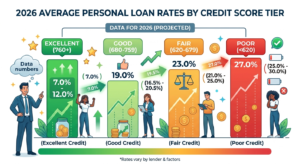
- Good credit (690-719): 7borrowers received an average rate of 19.04% as of July 1, 2026, according to Nerd Wallet pre-qualification data
- Fair credit (630-689): 7borrowers received an average rate of 22.65%
- Poor credit (below 630): 7borrowers who pre-qualified received an average rate of 26.79%, and consumers with the lowest scores may not qualify for a loan below 36%—the highest APR most consumer advocates say an affordable loan can have
The takeaway is clear: 1to score the lowest rates, you need excellent credit—some experts identify 760 or higher as the sweet spot, though lenders vary on this point.
Why Rates Matter So Much: A Real Example
Small percentage differences translate into big dollar amounts. 16For example, a $10,000 loan with a 36-month term at a 13.5% rate would come with a monthly payment of $339 and roughly $2,217 in total interest by the time it’s paid off. Cut that rate in half, and you’d save over $1,000 on the same loan. This is why the strategies in this article are worth your time.
What Determines Your Personal Loan Rate?
Understanding what lenders look at helps you know exactly where to focus your improvement efforts.
Your Credit Score and History
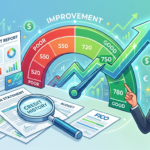
12 Your credit score will have a big impact on your personal loan rates—lenders typically offer the lowest rates to borrowers with the best credit, since a high score signals lower lending risk. Your payment history, credit utilization, and overall credit profile all feed into this. If your score needs work, our complete guide on [how to improve your credit score in 90 days](#) walks you through the process step by step.
Your Debt-to-Income Ratio (DTI)
2 Lenders look closely at your debt-to-income (DTI) ratio to evaluate your ability to take on new monthly installments. This ratio compares your monthly debt payments to your gross monthly income. The lower your DTI, the more confident lenders feel that you can handle a new payment—and the better your rate offers become.
Your Income and Employment Stability
Lenders want assurance that you have reliable income to repay the loan. Steady employment and higher income strengthen your application. 7A good score will help you qualify for a low rate, but the lowest rates go to those with low debt, high income, and a credit history showing accounts in good standing.
Loan Amount, Term, and Purpose
1 Other aspects of your finances, the loan term, and the amount you apply for also influence your rate. Shorter terms generally come with lower rates. Interestingly, your loan’s purpose can matter too: 4 on average, loans used to pay off current debt had lower rates than most other loan purposes—good news if you’re consolidating.
The Type of Lender
14 Banks and credit unions offer personal loans at competitive rates, but you may find lower rates through online lenders specializing in personal loans. Each lender type has its own risk appetite and pricing model, which is exactly why shopping around pays off.
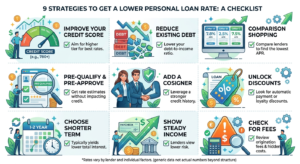
9 Proven Strategies to Get the Best Personal Loan Rate
Now for the actionable part. Here are nine strategies that can meaningfully lower the rate you’re offered.
Strategy 1: Check and Improve Your Credit First
11 Start by checking your credit report and score to see where you stand. If you don’t urgently need the money, consider delaying your application to strengthen your credit. 12 If your credit isn’t great and you don’t have an urgent cost to cover, it may make sense to work on building your credit before you apply—taking this step could result in significantly lower borrowing costs. 12 In the months before you apply, make timely payments on all your bills, pay down existing debt, and keep older credit accounts open to help boost your scores.
Strategy 2: Lower Your Debt-to-Income Ratio
Attack your existing debt before applying. 2Clearing out small credit card balances, pausing heavy spending, and keeping your credit utilization low protects your credit score from temporary dips and proves to lenders you can responsibly manage your finances. Our guide on how to pay off credit card debt fast offers seven strategies to accelerate this process.
Strategy 3: Shop Around and Compare Multiple Lenders
This is the single most impactful step at application time. 14Rates not only fluctuate but can vary widely by lender, and several factors play a part in the rate you’re offered—that’s why being prepared to shop around and compare what different lenders offer is so important. 1Comparing offers from multiple lenders can help you find the best deal available.
Strategy 4: Use Pre-Qualification With Soft Credit Checks
You can compare offers without hurting your credit. 13Look for lenders who offer rate quotes with just a soft credit check, which won’t impact your credit score—and remember to check eligibility requirements before you apply. Pre-qualify with at least three to five lenders to see your realistic rate range.
Strategy 5: Consider a Cosigner or Co-Borrower
If your credit or income is thin, adding a stronger applicant can transform your offers. 14A co-signer acts as a backer on your loan—they won’t have access to the funds but agree to make payments if you default, while a co-borrower shares access to the funds and is equally responsible for payments. To get the best rate, look for a co-signer or co-borrower with a high credit score, low debt, and good income history.
Just weigh the relationship implications carefully: 11the person’s credit and income will impact your loan offers, and they’ll be responsible for repaying if you fall behind—so consider how the shared obligation could impact your relationship.
Strategy 6: Ask About Rate Discounts
Discounts are hiding in plain sight. 13Many lenders offer an interest rate discount to borrowers who enroll in automatic monthly payments. You may also get a discount by applying with a worthy co-applicant, securing the loan with a vehicle, or agreeing to have existing debt paid off directly with your new loan. It never hurts to ask if discounts are available. Setting up autopay is a natural fit if you’ve read our guide on how to automate your finances.
Strategy 7: Choose a Shorter Loan Term
Shorter terms typically mean lower rates and far less total interest. 8Keep in mind, the longer the term, the more interest you’ll pay. 16A lower monthly payment on a longer term isn’t always the better deal once you factor in total interest, so it’s worth running the numbers for a few different scenarios.
Strategy 8: Maximize Your Reported Income
Income matters more than most applicants realize. 11A raise, promotion, or additional work might help you qualify for a larger loan and better rates. If that’s not an option, review what counts as income on the application—you may be overlooking sources such as investment income or a spouse’s income that you can include. A side hustle can also boost your income—browse our side hustle ideas that pay $500+ per month.
Strategy 9: Look Beyond the Interest Rate to the Full APR
The advertised rate isn’t the whole story. 11The offer with the lowest APR might be best, but also consider factors beyond the rate, such as the origination fee—you might have to request a larger loan because the fee could be taken out of the loan’s proceeds.
Fees can dramatically change the real cost of a loan. 9For example, a five-year $10,000 personal loan with a 15.63% interest rate and an 8.99% origination fee results in a 20.02% APR—you would receive only $9,101 and make 60 monthly payments of $241.22. 2Try to choose online lenders that don’t charge origination fees, if you qualify.
https://finance4you.online/how-to-pay-off-credit-card-debt-fast/
Where to Get a Personal Loan: Comparing Your Options
16 Personal loans are available from banks, credit unions, and online lenders, and rates, fees, and terms can vary widely between them. Here’s how the three main options compare.
Banks
Traditional banks offer stability and the convenience of in-person service. If you have an existing relationship with a bank, you may qualify for relationship discounts. However, banks often have stricter approval requirements and slower processes than online lenders.
Credit Unions
As member-owned nonprofits, credit unions frequently offer lower rates and more flexible underwriting than banks, especially for members with imperfect credit. 2According to recent National Credit Union Administration data, the average finance rate for personal loans from commercial banks is 12.06% for a three-year term—and credit unions often beat bank pricing.
Online Lenders
Online lenders typically offer the fastest applications, quick funding, and competitive rates—especially for borrowers with strong credit. 8Once you sign the loan agreement, some lenders may be able to fund your loan within one business day. Many also let you pre-qualify with only a soft credit check, making comparison shopping painless.
Don’t Forget the Fine Print
Whichever lender type you choose, look past the rate alone. 15Just because a lender has the lowest rate doesn’t make it the best option—look for flexible repayment plans, hardship options, and strong service. 8Finally, review the final terms of your loan to make sure the fees and APR match your expectations.
When a Personal Loan Makes Sense (and When It Doesn’t)
A great rate on the wrong loan is still a mistake. Let’s be honest about when personal loans are the right tool.
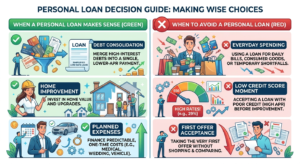
Good Reasons to Get a Personal Loan
Debt consolidation. This is one of the smartest uses. 5Because personal loans offer fixed monthly payments, they’re a solid tool for eliminating credit card debt, provided your credit profile qualifies you for the lowest market pricing. If you’re weighing this move, read our full comparison of debt consolidation vs debt settlement first.
Large, planned expenses. 1Personal loans are a bad choice for regular purchases, but a great choice for large expenses like home improvements or debt consolidation.
Predictable payoff. 8The best time to get a personal loan is when you have a solid, predictable income and want a definite payoff date for the money you borrow.
When to Avoid a Personal Loan
- Everyday spending or lifestyle costs. If you need a loan to cover routine expenses, the real problem is a budget gap—fix that first with our guide on the 50/30/20 budget rule or zero-based budgeting.
- When your credit is at its lowest point. If you can wait a few months and boost your score, you could save thousands.
- When you haven’t compared offers. Accepting the first offer you receive is one of the most expensive mistakes borrowers make.
After You Get Your Loan
Getting the loan is only half the job. 13Once you get your personal loan, use it wisely—stay on top of your monthly payments, as late payments can seriously impact your credit, and don’t let an influx of cash distract you from your regular budget. Set up autopay immediately, and if you consolidated debt, resist the temptation to run up new balances on your now-empty credit cards.
https://finance4you.online/how-to-improve-credit-score/
How to Apply for a Personal Loan: Step-by-Step
Ready to apply? Follow this process to maximize your chances of a great rate.
Step 1: Check Your Credit Report and Score
Pull your free credit reports and review them for errors that could be dragging down your score. Dispute any inaccuracies before you apply—this alone can improve your offers.
Step 2: Calculate How Much You Need
Borrow only what you need. Remember that origination fees may be deducted from your proceeds, so factor that into your requested amount. 16A personal loan calculator can help you estimate your monthly payment and total interest cost before you apply, and comparing different loan amounts, rates, and terms can help you narrow down which offers are actually worth pursuing.
Step 3: Pre-Qualify With Multiple Lenders
Use soft-check pre-qualification with at least three to five lenders across different types (bank, credit union, online). Compare the full APR, fees, term options, and monthly payments—not just the headline rate.
Step 4: Choose Your Offer and Submit a Full Application
Once you’ve identified the best offer, complete the formal application. This will trigger a hard credit inquiry, but since you’ve pre-qualified, you know what to expect. Have your documents ready: proof of income, employment verification, and identification.
Step 5: Review Final Terms and Sign
Verify that the final APR, fees, and payment schedule match what you were quoted. Then sign, receive your funds, and immediately set up automatic payments to protect your credit and potentially earn a rate discount.
Frequently Asked Questions
What is a good personal loan rate in 2026?
Anything meaningfully below the current averages is a good deal. 5With the average rate at 12.41% for a borrower with a 700 FICO score, a rate in the single digits is excellent. 10Among top-rated lenders, the lowest advertised rate is around 6.20%—though 1most borrowers won’t qualify for the lowest advertised interest rate.
What credit score do I need for the best personal loan rates?
1 You need excellent credit to score the lowest rates—some experts identify 760 or higher as the sweet spot, but lenders can vary quite a bit on this point. That said, 11 you may need a good to excellent credit score and a low debt-to-income ratio to get the best interest rate.
Can I get a personal loan with bad credit?
Yes, but expect to pay more. 1Those with poor credit can expect higher interest rates well above average, but if you have otherwise strong financials, some lenders may offer reasonable rates. You can also pledge collateral or use a cosigner to score a more competitive rate.
Does applying for a personal loan hurt my credit?
Pre-qualification with a soft credit check doesn’t affect your score at all. The formal application triggers a hard inquiry, which typically causes only a small, temporary dip. The bigger long-term factor is how you manage the loan—on-time payments help your credit, while late payments hurt it significantly.
Is a personal loan better than a credit card for debt consolidation?
Often, yes. Personal loans typically carry lower rates than credit cards and offer fixed payments with a defined payoff date. 4On average, loans used to pay off current debt had lower rates than most other loan purposes, and if you reduce your monthly debt payments, you could use the freed-up funds for other goals. For a full breakdown, see our guide on debt consolidation vs debt settlement.
Should I choose a longer term for a lower monthly payment?
Be careful here. A longer term lowers your monthly payment but increases your total cost. 16A lower monthly payment on a longer term isn’t always the better deal once you factor in the total interest you’d pay, so run the numbers for a few different scenarios. Choose the shortest term you can comfortably afford.
Conclusion: A Better Rate Is Within Your Control
Getting the best personal loan rate isn’t about luck or secret connections—it’s about preparation and comparison. The borrowers who pay the least are the ones who check their credit before applying, reduce their debt-to-income ratio, pre-qualify with multiple lenders, and scrutinize the full cost of each offer, fees included.
Remember the fundamentals: your credit score drives your rate more than any other factor, so investing a few months in improving it can save you thousands. When you’re ready to borrow, never accept the first offer—shop at least three to five lenders using soft-check pre-qualification, ask about discounts, and choose the shortest term your budget allows.
A personal loan, used wisely, can simplify your debt, fund important goals, and even improve your credit over time. Used carelessly, it becomes just another expensive burden. The difference comes down to the preparation you do before you sign.
Ready to put yourself in the best borrowing position? Start by improving your credit score in 90 days, tackle your existing balances with our guide on how to pay off credit card debt fast, and decide whether consolidation is your best move with our comparison of debt consolidation vs debt settlement. And to make sure you never miss a loan payment, learn how to automate your finances. Your lowest possible rate is waiting—go earn it.
Disclaimer: This article is for informational purposes only and does not constitute financial advice. Rates mentioned were accurate as of publication and change frequently. Your individual rate will depend on your credit profile, income, and lender. Consider consulting a qualified financial advisor before taking on new debt.