
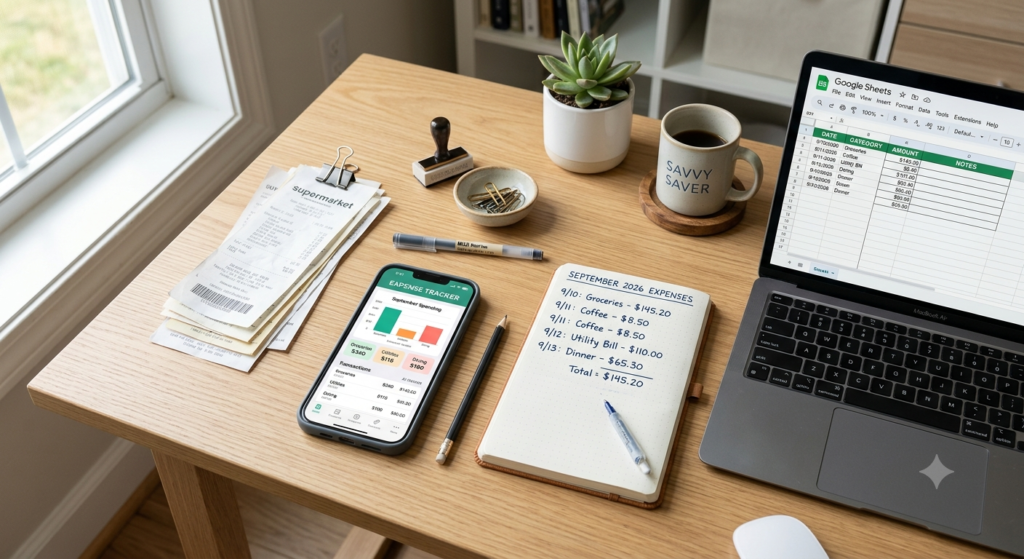

Introduction
You sit down to review your finances at the end of the month, and there it is again—that sinking feeling. Somehow, hundreds of dollars have vanished, and you have no idea where they went. Sound familiar?
You’re not alone. The vast majority of people dramatically underestimate how much they spend, especially on small, everyday purchases. That $6 coffee, the $12 lunch, the impulse $30 online order—individually they feel harmless, but together they can quietly drain your bank account by hundreds of dollars each month.
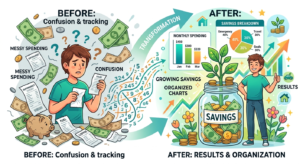
Here’s the good news: tracking your expenses is the single most powerful habit you can build to transform your finances. When you know exactly where every dollar goes, you gain the power to redirect that money toward what actually matters—whether that’s paying off debt, building an emergency fund, or finally saving for that dream vacation.https://finance4you.online/how-to-create-zero-based-budget-guide/
The problem? Most people think expense tracking is tedious, time-consuming, and complicated. It doesn’t have to be. In this guide, I’ll walk you through five proven expense tracking methods—from fully automated apps to simple pen-and-paper systems—so you can find the one that fits your lifestyle and personality. By the end, you’ll have everything you need to start tracking today. Lets see how to track expenses
Let’s dive in.
Why Tracking Your Expenses Matters More Than You Think
Before we get into the “how,” let’s talk about the “why.” Understanding the real benefits of expense tracking will motivate you to stick with it.
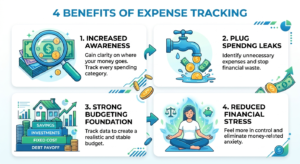
You Can’t Improve What You Don’t Measure
This principle applies to fitness, business, and especially personal finance. You might think you know your spending habits, but until you actually track them, you’re operating on guesses. Expense tracking replaces assumptions with hard data.
When you see the real numbers—like discovering you spent $340 on takeout last month—it becomes impossible to ignore. That awareness alone often leads to natural behavior changes without any forced deprivation.
It Reveals Hidden Spending Leaks
Small, recurring expenses are the silent killers of budgets. Forgotten subscriptions, mindless impulse buys, and convenience purchases add up faster than you’d imagine. Tracking exposes these leaks so you can plug them.
It Powers Every Budgeting Method
Whether you follow a zero-based budget or the 50/30/20 rule, expense tracking is the foundation that makes it work. Without knowing your actual spending, any budget is just a wish list. Tracking turns your budget from theory into reality.
It Reduces Financial Stress
There’s a certain peace of mind that comes from knowing exactly where you stand financially. Instead of anxiety and uncertainty, you gain clarity and control. You stop wondering if you can afford something—you know.
What You Need Before You Start Tracking
Tracking expenses is simple, but a little preparation makes it far more effective. Here’s what to gather before you begin.
Know Your Income
Start with a clear picture of your monthly take-home pay. This is your baseline—the amount you have to work with. If your income varies, calculate an average based on the past few months.
Gather Your Financial Statements
Pull together your recent bank statements, credit card statements, and any receipts you have on hand. These give you a starting point and help you catch recurring expenses you might otherwise forget.
Decide on Your Categories
Before tracking, define the categories you’ll use to organize your spending. Common categories include:
- Housing (rent, mortgage, utilities)
- Transportation (gas, car payment, public transit)
- Food (groceries, dining out)
- Insurance (health, auto, home)
- Debt payments (loans, credit cards)
- Personal (clothing, subscriptions, entertainment)
- Savings (emergency fund, investments)
- Miscellaneous (everything else)
Having clear categories makes it easy to spot exactly where your money flows and which areas need attention.
https://finance4you.online/50-30-20-budget-rule-explained/
Method 1: Budgeting Apps (Best for Automation)
If you want the easiest, most hands-off approach, budgeting apps are the way to go. These apps connect directly to your bank accounts and credit cards, automatically importing and categorizing every transaction.
How It Works
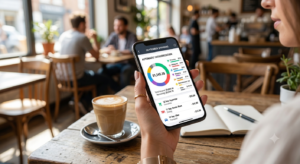
You link your financial accounts to the app, and it pulls in your transactions in real time. The app sorts each purchase into categories, shows you visual charts of your spending, and often sends alerts when you’re approaching budget limits.
Why It Works So Well
The biggest advantage is that it removes the friction of manual entry. Since the tracking happens automatically, you’re far more likely to stick with it. You simply open the app to see exactly where your money is going—no math required.
Most apps also offer helpful features like bill reminders, spending trends over time, and goal tracking. Some can even detect and help you cancel unwanted subscriptions.
Who It’s Best For
Budgeting apps are perfect for busy people, tech-savvy individuals, and anyone who has struggled to maintain manual tracking systems. If you’ve abandoned expense tracking before because it felt like too much work, automation might be your solution.
For a complete breakdown of the top options—including free and paid choices—check out our detailed guide on the best budgeting apps for 2026.
The Downside
The main drawback is privacy—you’re sharing your financial data with a third-party app. While reputable apps use bank-level encryption, some people simply prefer not to link their accounts. Additionally, automatic categorization isn’t always accurate, so you’ll occasionally need to recategorize transactions manually.
Method 2: Spreadsheets (Best for Customization)
For those who love control and customization, a good old-fashioned spreadsheet is hard to beat. Using tools like Google Sheets or Microsoft Excel, you can build a tracking system tailored exactly to your needs.
How It Works
You create columns for the date, description, category, and amount of each expense. As you spend, you enter each transaction into the spreadsheet. With formulas, you can automatically total your spending by category and compare it against your budget.
Why It Works So Well
Spreadsheets offer unmatched flexibility. You control every aspect—the categories, the layout, the calculations, and the visual charts. Unlike apps, there’s no monthly fee and no sharing of your financial data with third parties.
The act of manually entering each expense also creates awareness. When you have to type in that $50 impulse purchase, you feel it more than when it’s automatically imported. This mindfulness can naturally curb overspending.
Who It’s Best For
Spreadsheets are ideal for detail-oriented people, those who enjoy customization, and anyone who wants complete privacy and control over their data. If you like seeing your numbers laid out exactly how you want them, this method shines.
Getting Started
You don’t need to build a spreadsheet from scratch. Both Google Sheets and Excel offer free budget templates you can customize. Simply search their template galleries, pick one you like, and start entering your expenses.
The Downside
The obvious drawback is the manual effort. You have to remember to enter every transaction, which requires discipline. If you fall behind, catching up can feel overwhelming. There’s also a slight learning curve if you’re not comfortable with formulas.
Method 3: The Envelope System (Best for Cash Spenders)
The envelope system is a time-tested method that’s particularly effective for people who tend to overspend. It’s a physical, tactile approach that makes your spending limits impossible to ignore.
How It Works
At the start of each month, you withdraw cash and divide it into labeled envelopes—one for each spending category (groceries, dining out, entertainment, etc.). When you need to make a purchase, you use the money from the corresponding envelope. When an envelope is empty, you’re done spending in that category until next month.
Why It Works So Well
There’s powerful psychology behind physical cash. Studies consistently show that people spend less when using cash instead of cards, because handing over physical money feels more “real” than tapping a card. The envelope system leverages this to naturally curb overspending.
The visual, hands-on nature also makes your budget tangible. You can literally see how much money is left in each category, which creates instant accountability.
Who It’s Best For
The envelope system is perfect for chronic over spenders, people who struggle with self-control around money, and those who prefer a simple, low-tech approach. If swiping cards makes it too easy to overspend, going cash-only can be transformative.
The Modern Twist
If carrying cash isn’t practical, several apps digitize the envelope method, letting you allocate money into virtual envelopes while still using your debit card. This gives you the psychological benefits of the envelope system with the convenience of cards.
The Downside
Carrying cash isn’t always practical or safe, and it doesn’t work for online purchases or automatic bills. It also requires trips to the ATM and careful planning. In our increasingly cashless world, this method can feel a bit inconvenient.
Method 4: Pen and Paper (Best for Simplicity)
Sometimes the simplest method is the most effective. Tracking expenses with pen and paper—in a notebook, journal, or printable tracker—remains popular for good reason.
How It Works
You keep a dedicated notebook or printed expense tracker where you write down every purchase as you make it (or at the end of each day). At the end of the week or month, you total up your spending by category.
Why It Works So Well
The physical act of writing engages your brain differently than typing or automatic tracking. Studies on note-taking show that writing by hand improves memory and awareness. When you manually record each expense, you’re forced to consciously acknowledge your spending, which builds powerful financial mindfulness.
There’s also no technology required, no accounts to link, and complete privacy. You can start immediately with just a pen and any piece of paper.
Who It’s Best For
Pen-and-paper tracking is ideal for people who prefer analog methods, those who feel overwhelmed by technology, and anyone who wants to build deep awareness of their spending habits. It’s also great for people who distrust sharing financial data digitally.
Who It’s Best For Learning
This method is especially valuable for beginners. Because it forces you to slow down and think about each expense, it’s an excellent way to learn your spending patterns before graduating to a faster method like an app or spreadsheet.
The Downside
It’s the most labor-intensive method and relies entirely on your discipline to record every purchase. There are no automatic calculations, so you’ll do the math yourself. It’s also easy to forget entries or lose your notebook.
Method 5: The Receipt and Statement Review (Best for Minimalists)
If daily tracking feels like too much, the receipt and statement review method offers a lower-effort alternative. Instead of logging every purchase in real time, you review your spending periodically.
How It Works
Throughout the month, you save your receipts (physical or digital) and let your transactions accumulate on your bank and credit card statements. Then, once a week or once a month, you sit down and review everything, categorizing your spending and noting where your money went.
Why It Works So Well
This method requires far less daily effort. Rather than logging every coffee purchase, you batch your tracking into periodic review sessions. For many people, this feels more sustainable than constant tracking.
Reviewing statements also gives you a clear, comprehensive picture of your spending patterns over time. You can easily spot recurring charges, forgotten subscriptions, and trends you might miss with day-to-day tracking.
Who It’s Best For
This approach works well for people who find daily tracking tedious, those with relatively stable spending habits, and anyone who wants a middle ground between full automation and manual entry. It’s also great if most of your spending happens on cards, creating a clear digital trail.
The Downside
The main weakness is that it’s reactive rather than proactive. Since you’re reviewing after the fact, you can’t stop overspending in the moment—you only discover it later. This method builds awareness but offers less real-time control than daily tracking.

https://finance4you.online/best-budgeting-apps/
How to Choose the Right Expense Tracking Method for You
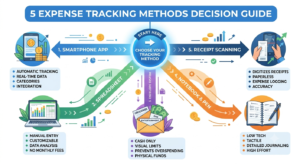
With five solid methods to choose from, how do you pick the right one? The answer depends on your personality, lifestyle, and goals. Here’s a quick guide.
Choose Budgeting Apps If…
You value convenience and automation, you’re comfortable with technology, and you’ve struggled to maintain manual tracking in the past. This is the lowest-effort, highest-consistency option for most people.
Choose Spreadsheets If…
You love customization and control, you enjoy working with data, and you want a free method with complete privacy. Perfect for detail-oriented planners.
Choose the Envelope System If…
You tend to overspend, you respond well to physical limits, and you want to build stronger self-discipline around money. Ideal for breaking bad spending habits.
Choose Pen and Paper If…
You prefer analog simplicity, you want to build deep spending awareness, and you distrust digital financial tools. Great for beginners learning their habits.
Choose Receipt Review If…
You find daily tracking tedious, most of your spending is on cards, and you prefer periodic check-ins over constant logging. A sustainable middle-ground option.
You Can Combine Methods Too
Many successful budgeters mix methods. For example, you might use an app for automatic tracking while also keeping a small notebook for cash purchases. Or use a spreadsheet for the big picture while doing weekly receipt reviews. Feel free to experiment until you find your perfect system.
Pro Tips to Make Expense Tracking Stick
Choosing a method is only half the battle. The real challenge is building a consistent habit. Here are proven tips to make expense tracking a permanent part of your life.
Track in Real Time When Possible
The best time to record an expense is right when you make it. Waiting until later increases the chance you’ll forget. Whether you’re using an app, notebook, or spreadsheet, try to log purchases immediately—it takes just seconds.
Set a Daily or Weekly Reminder
Consistency comes from routine. Set a recurring reminder on your phone to review and update your tracking. Even five minutes a day or a longer session once a week keeps you on track.
Start Simple and Refine Later
Don’t overcomplicate things at the start. Begin with broad categories and a simple method. As you get comfortable, you can add more detail and precision. The goal is to start—perfection can come later.
Review Your Data Regularly
Tracking is pointless if you never look at the data. Schedule a monthly review to analyze your spending, celebrate wins, and identify areas to improve. This is where tracking transforms into real financial progress.
Automate What You Can
Even if you prefer manual methods, automate the repetitive parts of your finances. Set up automatic bill payments and savings transfers so you have fewer things to track manually. Learn more in our guide on how to automate your finances.
Don’t Aim for Perfection
You’ll miss entries. You’ll forget purchases. That’s okay. The goal isn’t flawless tracking—it’s building enough awareness to make better decisions. Don’t let one missed day derail your entire system.
Turning Your Tracking Data Into Real Results
Tracking your expenses is powerful, but it’s only the first step. The magic happens when you use that data to make positive changes.
Identify Your Problem Areas
Once you have a month or two of data, look for categories where you’re spending more than you’d like. These are your opportunities. Maybe dining out is eating up a huge chunk, or subscriptions are quietly draining your account.
Set Realistic Reduction Goals
Rather than eliminating spending entirely, aim for reasonable reductions. If you spend $400 on takeout, try cutting it to $250 next month. Small, sustainable changes stick better than drastic cuts.
Redirect Savings Toward Your Goals
Every dollar you save through better spending awareness can be redirected toward something meaningful. Put it toward paying off debt, building your emergency fund, or investing for the future. To learn how to build that financial safety net, read our guide on how to build an emergency fund from scratch.
Connect Tracking to a Budget
Expense tracking and budgeting go hand in hand. Once you understand your spending patterns through tracking, you can build a realistic budget that actually works. If you haven’t set up a budget yet, start with our beginner-friendly guide on the 50/30/20 budget rule or the more detailed zero-based budgeting method.
Frequently Asked Questions About Tracking Expenses
How do I start tracking my expenses as a beginner?
Start simple. Choose one method that appeals to you—an app for automation or pen and paper for simplicity—and commit to recording every purchase for 30 days. Don’t worry about perfection; focus on building the habit. Once tracking becomes routine, you can refine your system.
How can I track expenses without an app?
You have several app-free options. Use a spreadsheet in Google Sheets or Excel, keep a physical notebook or printed tracker, use the cash envelope system, or simply review your bank and credit card statements periodically. All of these methods work well without linking any accounts to third-party apps.
How often should I track my expenses?
Ideally, record expenses in real time as you make them, or at least once daily. Then, review your overall spending weekly and do a comprehensive analysis monthly. This rhythm keeps you aware in the moment while giving you the big-picture perspective you need to make changes.
What’s the easiest way to track expenses?
Budgeting apps are the easiest because they automatically import and categorize your transactions. Once you link your accounts, tracking happens almost effortlessly—you just open the app to see where your money went. This is the lowest-effort option for staying consistent.
Should I track cash spending too?
Absolutely. Cash spending is often the hardest to track and the easiest to forget, which makes it a common source of budget leaks. If you use cash frequently, keep receipts or jot down purchases immediately. The envelope system is especially effective for controlling cash spending.
How detailed should my expense categories be?
Start with broad categories like housing, food, transportation, and entertainment. As you get comfortable, you can break them into subcategories (e.g., splitting “food” into groceries and dining out). More detail gives you better insights, but don’t make it so complex that you abandon tracking altogether.
Conclusion: Your Path to Financial Clarity Starts Today
Tracking your expenses might just be the most important financial habit you’ll ever build. It’s the foundation that everything else—budgeting, saving, investing, and achieving financial freedom—is built upon. Without it, you’re navigating your finances blindfolded. With it, you gain the clarity and control to direct your money toward what truly matters.
The best part? You don’t need to be a financial expert or a spreadsheet wizard to start. Whether you choose a fully automated app, a customizable spreadsheet, the disciplined envelope system, simple pen and paper, or periodic statement reviews, the key is simply to begin. Pick the method that fits your personality and lifestyle, commit to it for 30 days, and watch how your relationship with money transforms.
Remember, the goal isn’t perfect tracking—it’s building enough awareness to make smarter financial decisions. Every expense you record brings you one step closer to understanding, and ultimately mastering, your money.
Ready to put your tracking into action? Once you understand your spending patterns, the next step is building a budget that works. Start with the simple 50/30/20 budget rule or the more detailed zero-based budgeting method. To make tracking effortless, explore the best budgeting apps for 2026, or take your finances to the next level by learning how to automate your finances.
Your journey to financial clarity begins with a single tracked expense. Why not start today?